


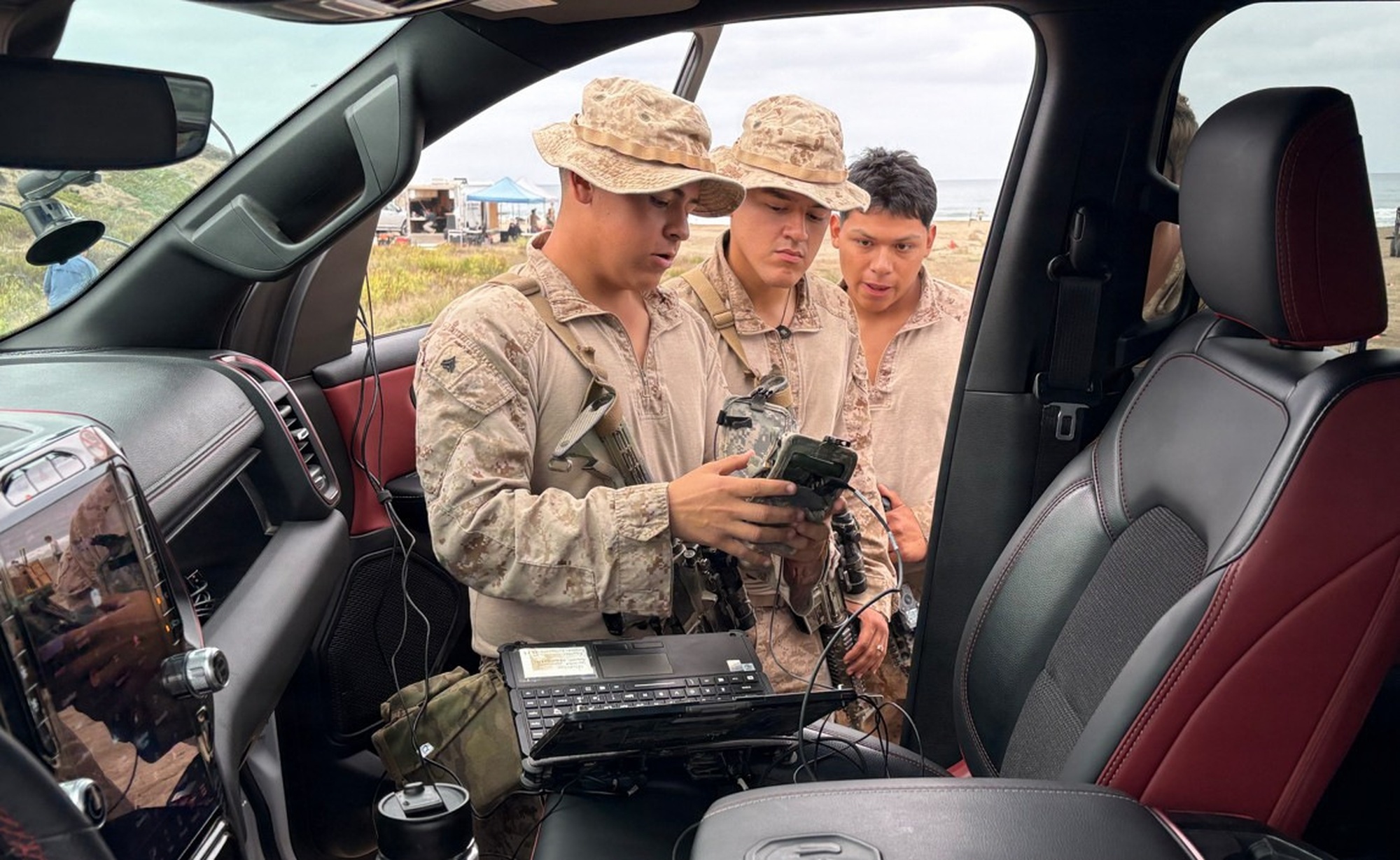
Cross-Service Cooperation Improves Reconnaissance Mapping Systems. (Photo by Matt Staley)
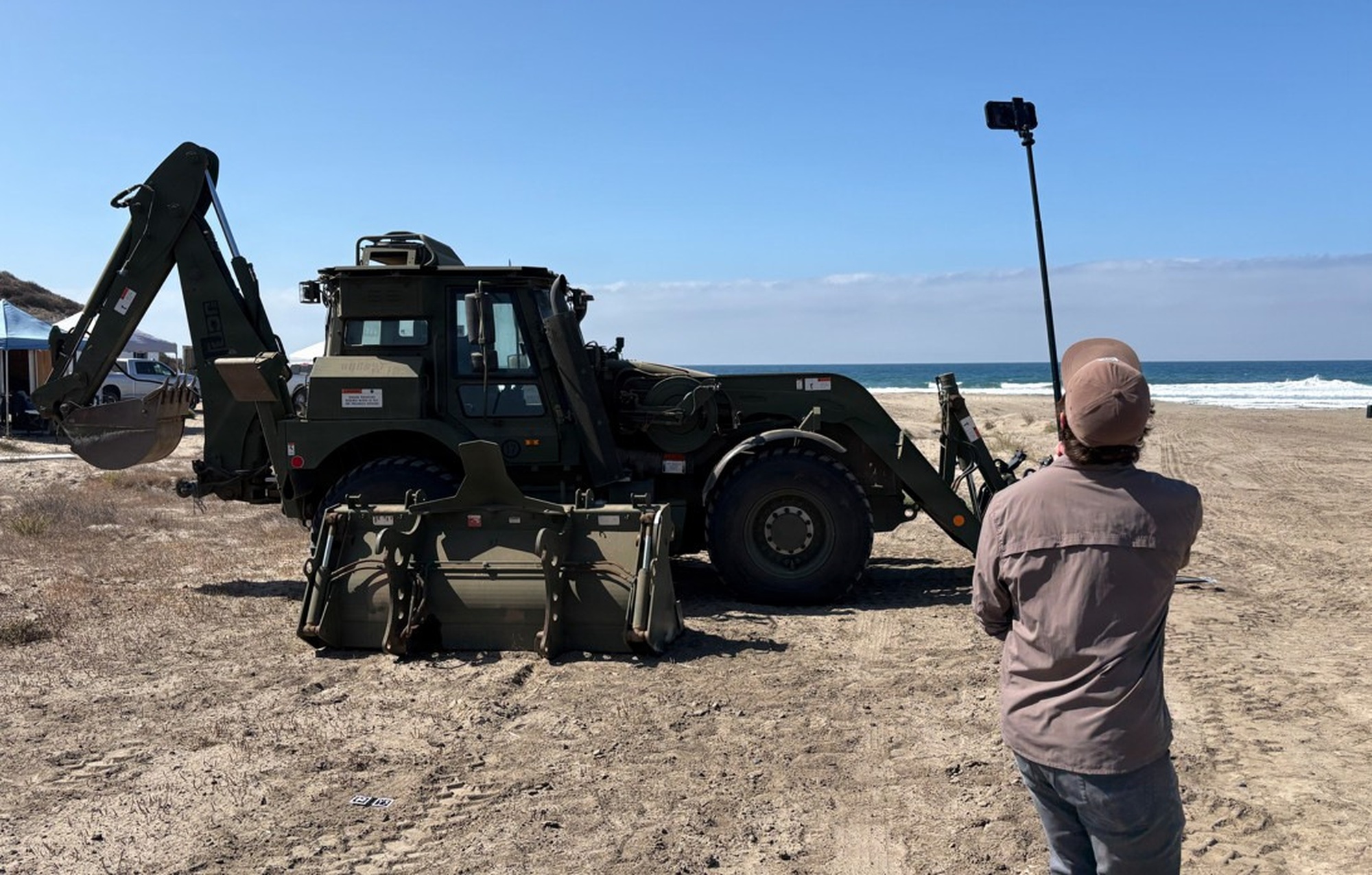
Cross-Service Cooperation Improves Reconnaissance Mapping Systems. (Photo by Matt Staley)
Army, Marine Corps, and Navy engineers worked shoulder-to-shoulder to boost reconnaissance mapping system interoperability during the Technical Concept Experiment 26.2 (TCE 26.2) at Camp Pendleton, CA.
The Army’s Product Lead for Combat Terrain Information Systems (PL CTIS) played a critical role at the TCE by leveraging its Instrument Set, Reconnaissance and Surveying (ENFIRE) kit of systems to successfully complete a series of experiments with Navy and Marine Corps engineers.
As a Marine Corps and Army program of record, ENFIRE provides ground-based engineer reconnaissance, collection, and analysis capabilities that support road, bridge, and route reconnaissance.
This was the seventh time PL CTIS participated in the Office of Naval Research (ONR) sponsored event. ONR Program Officer Dr. Joong Kim said ENFIRE helped engineers increase interoperability between reconnaissance systems.
“ENFIRE’s continued participation enables early experimentation with developmental concepts and Naval platforms, advancing interoperability and supporting more rapid capability integration across both services,” said Kim.
At TCE 26.2, PL CTIS conducted ENFIRE reconnaissance and Light Detection and Ranging (LiDAR) collections in various conditions and environments. These collections generated new route-data sets that were ingested into the centralized decision-making and analysis tool.
“During the event, the team processed a 10-minute UAS surf-zone video on the ENFIRE Getac [rugged laptop] in approximately six to nine minutes and exported the resulting product into ENFIRE through a one-button workflow,” Kim said. “This was a successful initial deployment of Littoral Imaging System (LIS) within the ENFIRE desktop application and demonstrated the value of TCEs for accelerating joint, cross-domain capability development.
TCEs also provide a realistic environment for the ENFIRE team to collect operationally relevant feedback while giving Marines hands-on training with multiple ENFIRE system versions—training opportunities that would be difficult to replicate elsewhere.
PL CTIS tested and evaluated new hardware/software configurations, integration with other participating technologies, and gained valuable feedback for continuous ENFIRE improvement and modernization.
PL CTIS Product Lead Cory Baron described the TCE as a success to further develop engineer reconnaissance capabilities.
“For CTIS, the event provides a valuable operational environment to evaluate prototypes, gather direct user feedback, and refine capabilities through iterative experimentation,” said Baron. “These efforts help us move promising concepts from the art of the possible toward practical, interoperable tools that improve situational understanding, engineering support, and decision-making across the force.”