



MISSION:
Develop, acquire, field, and supply life cycle support to tactically relevant aerial intelligence, surveillance, and reconnaissance (ISR) sensors that maintain battlespace awareness and superiority.
VISION:
Deliver the Army’s premier aerial ISR sensors enabling timely dissemination of intelligence products to meet current and future Soldier needs. Engage necessary stakeholders and mission partners across the Army Intelligence Community to enable critical reach processing, exploitation, and dissemination (PED) operations.
End State: Products support the Soldier with actionable intelligence in the right place, right time, and at the best value for our nation.
DESCRIPTION:
Deliver the Army’s premier aerial ISR sensors enabling timely dissemination of intelligence products to meet current and future Soldier needs.
Engage necessary stakeholders and mission partners across the Army Intelligence Community to enable critical reach PED operations.
Fulfill urgent operational needs by quickly providing Soldiers the Quick Reaction Capabilities and Programs of Record needed to maintain battle space awareness and superiority.
MS. JULIE ISAAC

Ms. Julie Isaac assumed responsibilities as the Project Director for Sensors Aerial Intelligence (PD SAI) in May 2024. She leads an organization responsible for the delivery of the Army’s premier aerial intelligence, surveillance, and reconnaissance (ISR) sensors to enable the timely dissemination of intelligence products to meet current and future Soldier needs.
Ms. Isaac started her career in acquisition as a statistician, working on multiple assignments such as Program Office Estimates, Analysis of Acquisition and Business Case Analysis for numerous Acquisition Category (ACAT) II and ACAT III acquisition programs. She pursued many growth opportunities as a junior employee by engaging in opportunities within the Program Office in Contracts and Program Analysis within both Program Executive Office Command Control Communications-Tactical (PEO C3T) and PEO Intelligence, Electronic Warfare and Sensors (IEW&S) for ACAT I, II, and III programs.
In 2016, she started an assignment as Program Analyst for Program Manager Electronic Warfare and Integration where she guided the Business Management Division team through the growth to an ACAT I Major Automated Information System. This undertaking included the successful completion of an Army Cost Position, a Milestone B for Capability Drop 2 and a Limited Deployment Decision for Capability Drop 1.
Ms. Isaac was then selected as the Business Management Division Chief for PD SAI where she led a team providing guidance and oversight of the fiscal laws and regulations for the programs to execute funding and contracts through the yearly Program Plans Budget and Execution (PPBE) cycle. She spent a year of her time at PD SAI as Acting Deputy Project Director (DPD) during which she ensured seamless continuity of internal operations and maintained stakeholder relationships and engagements. She was awarded a C5ISR Top Ten Outstanding Personnel of the Year Award in 2021 for her time as Acting DPD.
In February 2022, she was selected as Deputy Project Manager for Position, Navigation, and Timing (PM PNT), where she led two of the Army’s modernization priorities through successful Milestone C and Initial Operational Test and Evaluation events. During her stead at PM PNT, the Alternative Navigation (ALTNAV) program received a successful Acquisition Shaping Panel and received verbal approval to enter program initiation.
Ms. Isaac assumed responsibilities as the DPD SAI in March 2024. As the DPD, she was responsible for manned and unmanned aerial sensor capabilities for the U.S. Army and other users.
Ms. Isaac’s passion for mentoring, training the acquisition workforce, and advocacy for women led to her being nominated for and receiving the APG Federal Women’s Program for Outstanding Women of the Year in 2023. She holds additional awards that include two Meritorious Civilian Service Medals, a Civilian Service Commendation Medal, and an Achievement Medal.
Ms. Isaac holds a Bachelor of Science in Mathematics and Economics. She is a U.S. Army Acquisition Corps Member, DoD Financial Management Level III certified with Defense Acquisition Workforce Improvement Act (DAWIA) certifications in both Business Financial Management and Program Management Career Fields.
 |
|
MS. TRACY NOVOA

Ms. Tracy Novoa became the Deputy Project Director (DPD) for PD Sensors-Ariel Intelligence (SAI), Aberdeen Proving Ground, Maryland, in June 2024. In her role as DPM, Ms. Novoa provides guidance and leadership for the SAI workforce of more than 127 personnel supporting 3 Army acquisition programs and multiple supporting efforts.
Ms. Novoa previously served as the Test and Evaluation Director for Project Management Office Positioning, Navigation and Timing (PM PNT) where she managed testing and the technical development and evaluation of Army Modernization Priority, DOT&E oversight, ACAT II/ACAT III and Middle Tier Acquisition programs. Ms. Novoa began her career in industry as an Associate Mechanical Engineer at Accudyne Systems, Inc based out of Newark, DE in 2007 and after six years was promoted to Lead Project Engineer/Program Manager. During her 14 year tenure at Accudyne, Ms. Novoa focused her energy on solving complex physics problems, developing custom automation and manufacturing solutions, and building coalitions within the Aerospace and Department of Defense Industries. In 2018, Ms. Novoa accepted a position with US Army Test and Evaluation Command (ATEC) at the Aberdeen Test Center (ATC), Aberdeen Proving Ground, MD in the Tactical Vehicles Division serving as lead test officer for the M88A2 program, Infantry Squad Vehicles (ISVs), and Army Future’s Command Expedient Leader Follower Program. In 2020, she began her Army Acquisition Career within PEO IEW&S, PM PNT as the Test and Evaluation Lead for PM Dismounted PNT.
Ms. Novoa holds a Master’s of Science in Mechanical Engineering from Johns Hopkins University and a Bachelor’s of Science in Mechanical Engineering from The University of Delaware.Ms. Novoa is married to Jonathan Novoa, an Associate Chief for DEVCOM Power Division, and has two sons Tristan and Connor.
|
|
LATEST PM SAI NEWS
RESOURCES
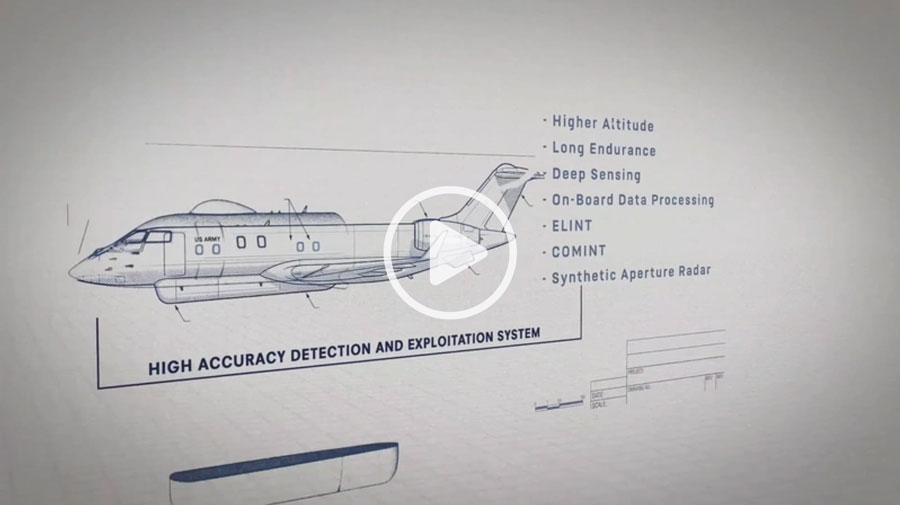
HIGH ACCURACY DETECTION AND EXPLOITATION SYSTEM (HADES) VIDEO

Product Lead Reconnaissance, Intelligence, Sensors, and Effects (PL RISE)
MULTI-DOMAIN SENSING SYSTEM (MDSS)
Programs
Product Lead Reconnaissance, Intelligence, Sensors, and Effects (PL RISE)
Common Sensor Payload (CSP)
MISSION:
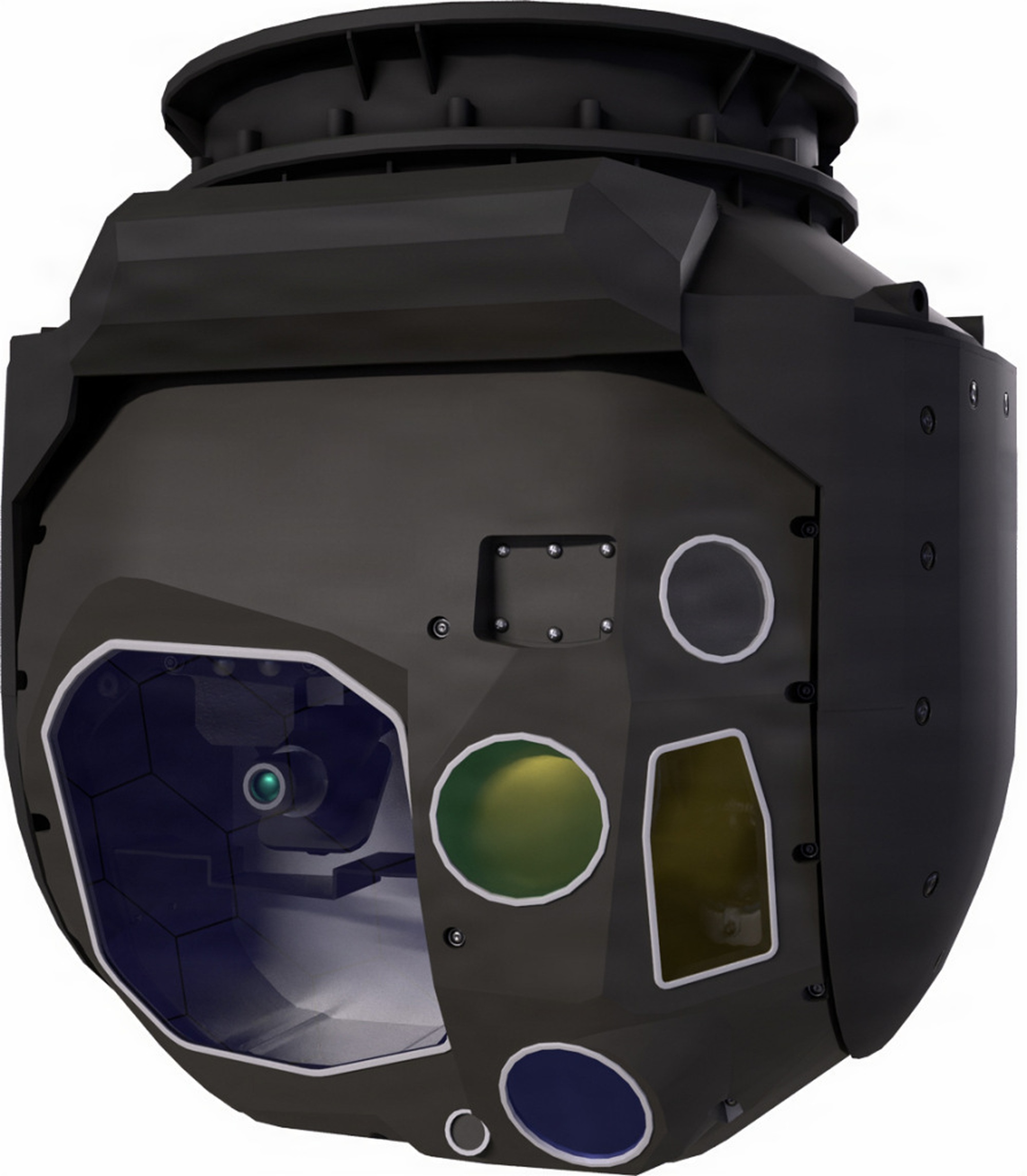
The CSP is an electro-optic/infrared/laser designator (EO/IR/LD) sensor that provides an advanced state-of-the-art sensor suite to the MQ-1C Gray Eagle uncrewed aircraft system (UAS) platform that can be used to collect critical information across the visible and infrared portions of the electromagnetic spectrum for Battlefield Commanders.
DESCRIPTION:
- The CSP is required for MQ-1C Gray Eagle UAS operation and serves as the “eyes” of the UAS by providing high-definition imagery in day or night conditions for detection and classification of targets/threats. The CSP also provides a targeting capability for laser-guided munitions.
- The upgraded CSP Version 3 (v3) is currently in production and includes a new Target Location Accuracy (TLA) capability that enables precision, near-real time engagements with Coordinate Seeking Weapons (CSWs) and reduces the sensor-to-shooter process from minutes to seconds.
SYSTEM INTERDEPENDENCIES:
- The CSP is required for the Gray Eagle to execute flight and its mission in support of Battlefield Commanders
PROGRAM STATUS:
- Post-Milestone C, Fully Fielded, Transitioned to sustainment
- Currently undergoing Pre-planned Product Improvements (P3Is) that resolve legacy CSP sensor obsolescence and bring new enhanced imaging and targeting capabilities to the Warfighter.
PROJECTED ACTIVITIES:
- FY26: CSP v3 production deliveries continue
- FY27: First Unit Equipped with CSP v3.
Common Sensor Payload (CSP)
High Altitude Extended-range Long-endurance Intelligence Observation System (HELIOS)
MISSION:
The Multi Domain Sensing System (MDSS), High-altitude Extended-range Long-endurance Intelligence Observation System (HELIOS) will provide deep sensing Intelligence, Surveillance and Reconnaissance Intelligence, Survellance and Reconnaissance (ISR) from high altitude (60-100,000 feet) against near-peer threats located one thousand miles or more beyond the Forward Line of Troops (FLOT).
DESCRIPTION:
HELIOS is just one component of the larger MDSS family of systems, which includes manned and unmanned ISR sensor-platform pairings arrayed in a self-healing network from low to high altitude through the entire depth of the future Multi Domain Operations (MDO) battlefield. As the Army transitions into an MDO capable and then an MDO ready force, HELIOS will serve as an essential component of the Waypoint and Aimpoint force.
Commanders require cross-domain solutions to penetrate anti-access/area denial defenses and precisely geolocate threat integrated air defense systems. The stratosphere is the final piece of the aerial domain that must be operationalized to complete the common operating picture across the entire depth of the future Multi Domain Operations (MDO) battlespace. Deep sensing from the stratosphere is a force multiplier for Joint, Army, and mission partners as it provides targetable data in near-real-time (NRT) for action by long-range Fires elements. Stratospheric sensors also increase commander’s situational understanding as it produces critical intelligence that is cloud discoverable by Joint All-Domain Command and Control systems and within the Army Command Post Computing Environment.
This deep sensing capability includes a mix of High-Altitude Intelligence, Surveillance, Reconnaissance (HA-ISR) sensors hosted on remotely piloted High Altitude Platforms (HAP) complemented by High Altitude Air Launched Effects (HA-ALE). These HA-ISR sensors will identify and develop land-based and maritime targets suitable for Long Range Precision Fires (LRPF) during conflict and provide persistent surveillance during competition on strategic areas of interest. In addition to its deep sensing capabilities, HA-ISR can conduct on-board data processing for rapid target recognition and reporting as well as a resilient architecture capable of functioning in disrupted, disconnected, intermittent and low-bandwidth (DDIL) environments.
SYSTEM INTERDEPENDENCIES:
- INSCOM Processing, Exploitation & Dissemination (PED) network, IEW&S sensors, IS&A TITAN (future), CPE Aviation
PROGRAM STATUS:
- Program Planning with program initiation in FY25
- Requirements Trace: HAP A-CDD and DS Annex
- (HAP-DS Validated 16 DEC 2022
PROJECTED ACTIVITIES:
- FY24: Continued sensor demonstrations
- FY24: Pre-contracting efforts
- FY25: Program initiation and contract award
High Altitude Platform-Deep Sensing (HAP-DS)
MISSION:
The MDSS HAP-DS will provide deep ISR from high altitude (60,000-100,000 feet) against near-peer threats located one thousand miles or more beyond the forward line of troops.
DESCRIPTION:
HAP-DS is just one component of the larger MDSS family of systems, which includes manned and unmanned ISR sensor-platform pairings arrayed in a self-healing network from low to high altitude through the entire depth of the future Multi-Domain Operations (MDO) battlefield. As the Army transitions into an MDO capable and then an MDO ready force, HAP-DS will serve as an essential component of the waypoint and aimpoint force.
Commanders require cross-domain solutions to penetrate anti-access/area denial defenses and precisely geolocate threat integrated air defense systems. The stratosphere is the final piece of the aerial domain that must be operationalized to complete the common operating picture across the entire depth of the future MDO battlespace. Deep sensing from the stratosphere is a force multiplier for Joint, Army, and mission partners as it provides targetable data in near-real-time for action by long-range Fires elements. Stratospheric sensors also increase a commander’s situational understanding as it produces critical intelligence that is cloud discoverable by Joint All-Domain Command and Control systems and within the Army Command Post Computing Environment.
This deep sensing capability includes a mix of High-Altitude ISR (HA-ISR) sensors hosted on remotely piloted HAP complemented by High Altitude Air Launched Effects. These HA-ISR sensors will identify and develop land-based and maritime targets suitable for Long Range Precision Fires during conflict and provide persistent surveillance during competition on strategic areas of interest. In addition to its deep sensing capabilities, the HA-ISR sensors can conduct on-board data processing for rapid target recognition and reporting as well as a resilient architecture capable of functioning in disrupted, disconnected, intermittent and low-bandwidth environments.
SYSTEM INTERDEPENDENCIES:
- U.S. Army Intelligence and Security Command PED network, CPE IEW&S sensors, Project Manager Intelligence Systems and Analytics Tactical Intelligence Targeting Access Node (TITAN) (future), CPE Aviation
PROGRAM STATUS:
- Program Planning with program initiation in FY25
- Requirements Trace: HAP Abbreviated Capability Development Document (A-CDD) and DS Annex (HAP-DS Validated 16 December 2022)
PROJECTED ACTIVITIES:
- FY25: Sensor prototype procurements
- FY25: Continued sensor demonstrations
High Efficiency RF Monitoring and Exploitation System (HERMES)
MISSION:
Provides Multi-Domain Operations (MDO) capable sensing against near-peer threats in highly contested electromagnetic, cyber, and Denied, Disconnected, Intermittent, and Limited (DDIL) environments
DESCRIPTION:
HERMES will provide MDO capable sensing against near-peer threats in highly contested electromagnetic, cyber, and Denied, Disconnected, Intermittent, and Limited (DDIL) environments. HERMES is employed on aerial ISR systems providing detection, identification, and precision geolocation of threats for targeting by the Army’s Integrated Fires System (IFS) through the entire depth of the future MDO battlefield.
HERMES provides multi-platform signals intelligence (SIGINT) for the aerial layer. The software defined radios collect on threat signatures in all theaters. HERMES sensors use secure, cyber resilient, assured data transport to feed artificial intelligence/machine learning (AI/ML) enabled processing, exploitation, and dissemination (PED) functions. HERMES relies on an integrated approach across the Multi-Domain Sensing System family of systems with the intent of converging capabilities from multiple domains, the electromagnetic spectrum, and the information environment supporting the MDO Force’s ability to achieve overmatch.
HERMES mitigates SIGINT collection gaps and provides the means to outpace adversary technology by advancing U.S. capabilities to the edge of technological innovation and operational relevance. It supports Commanders across all phases by revealing adversary capabilities, actions, and intent, providing targetable information, and satisfying information needs as the Joint Force transitions back to competition. The HERMES open architecture design and distributed network approach supports convergence of intelligence, electromagnetic warfare, cyberspace, and fires capabilities available to multi-domain formations. Ultimately, it increases Army relevance in the Joint fight and is a vital component of an MDO ready intelligence enterprise.
SYSTEM INTERDEPENDENCIES:
- HERMES interdependencies are still to be determined, but currently envisioned initially as a capability for the MQ-1 Gray Eagle uncrewed aircraft system (UAS)
PROGRAM STATUS:
- Requirement is in draft. Supporting the Army Capability Manager for Intelligence Sensors (ACM-IS) and intel community to develop and refine aerial unmanned SIGINT requirements
PROJECTED ACTIVITIES:
- Requirement pending Army approval – pre-requirement coordination with ACM-IS
Launched Effects (LE) Payloads
MISSION:
To deliver high-quality, cost-effective, multi-mission payloads for LE across all variants of uncrewed aircraft systems (UASs).
DESCRIPTION:
A Family of Systems (FoS) approach for all UAS/LE to allow flexibility in variants and versions across multiple platforms and payloads.
SYSTEM INTERDEPENDENCIES:
- Payloads are dependent on specific air vehicle size, weight, and power requirements that will limit the capabilities each size vehicle can have installed
PROGRAM STATUS:
PL RISE is currently working with multiple partner organizations to identify, integrate, test and demonstrate the functionality and benefits of a multifunction payload.
- Payload requirements and capabilities have been modified and incorporated into the in the 28 June 2024 approved LE Abbreviated Capabilities Development Document (A-CDD)
- Supporting integration and demonstration of payloads at various Community of Interest events such as SWARMS, DIESEL, Arcane Thunder
PROJECTED ACTIVITIES:
- PL RISE supports PM UAS and the LE community by providing payloads assistance on all payloads for the LE FoS.
- PL RISE has reached across the S&T communities and other PEOs/JPEOs to provide the “best of breed” capabilities
Micro High-Altitude Balloons (mHABs)
MISSION:
Provide kit to designated units per the mHAB Directed Requirement for experimentation and demonstration in the stratospheric Area of Operations.
DESCRIPTION:
The mHABs are low-cost, high altitude, low observable platforms that can be quickly launched by tactical units providing situation awareness, communication extension, and Launched Effects via various sensor capabilities.
SYSTEM INTERDEPENDENCIES:
- Payloads are dependent on specific air vehicle size, weight, and power requirement
PROGRAM STATUS:
- Supporting integration and demonstration of payloads at various Community of Interest events such as SWARMS, DIESEL, and African Lion.
PROJECTED ACTIVITIES:
- FY27 receipt of funding for procurement, fielding, and sustainment of payloads and platforms
MX Family of Systems (FoS)
MISSION:
MX FoS provides multi-sensor, multi-spectral surveillance of borders, forward operating bases, airfields and other vital worldwide assets.
DESCRIPTION:
MX FoS (which currently consists of MX‑10, MX‑10D, MX‑15, MX‑15D, MX‑20, MX‑20D, MX‑25, MX‑25D and variants/models of each) is a family of Image Intelligence (IMINT) sensor payloads with Electro‑Optic/Infrared (EO/IR) cameras providing High Definition (HD) and near real time Full‑Motion Video (FMV).
SYSTEM INTERDEPENDENCIES:
- Payload size is dependent on specific air vehicle size, weight, and power requirements.
PROGRAM STATUS:
- FY 26: PL RISE provides MX FoS repair support to Persistent Surveillance System-Tethered (PSS-T) Aerostats.
PROJECTED ACTIVITIES:
- FY26: Provide repair support to Army Foreign Military Sales (FMS) programs.
Persistent Surveillance and Dissemination System of Systems (PSDS2)
MISSION:
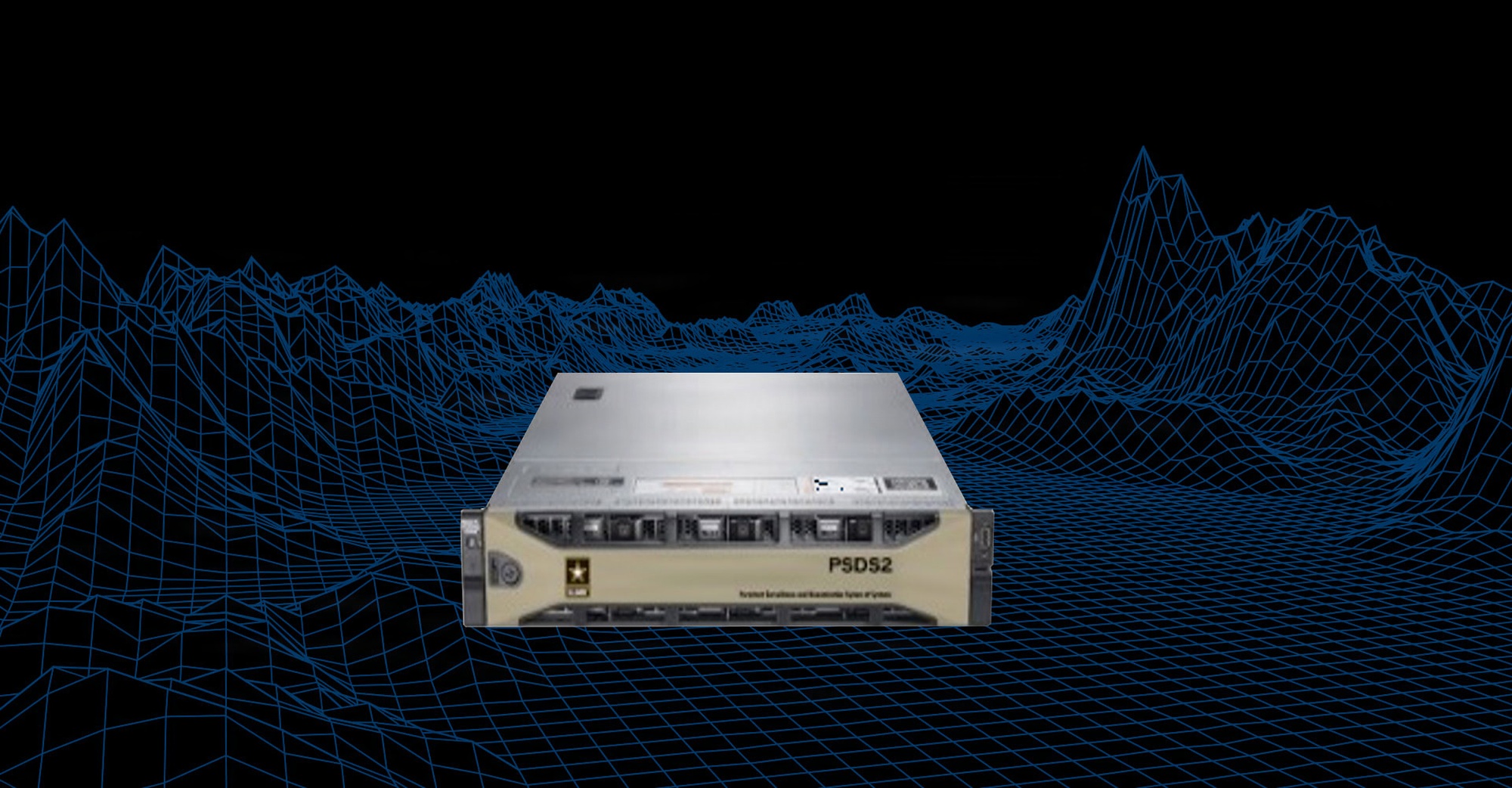
PSDS2 is a Full Motion Video (FMV) system and architecture that ingests video from sensors into a centralized location to support persistent surveillance, video exploitation, dissemination and archiving. PSDS2 has been fielded since 2005.
DESCRIPTION:
PSDS2 provides a sensor data management system that integrates multiple motion imagery sensors for enhanced situational awareness and rapid decision-making. PSDS2 provides real-time viewing, dissemination, archiving and exploitation for operations, intelligence and protection via a web browser thin-client user interface. PSDS2 is a Quick Reaction Capability (QRC) that has been fielded since 2005.
SYSTEM INTERDEPENDENCIES:
- PSDS2 is an architecture; it does not have direct system interdependencies
PROGRAM STATUS:
- Sustainment
PROJECTED ACTIVITIES:
- PSDS2 continues to provide support for on-going theater efforts
Persistent Surveillance and Dissemination System of Systems (PSDS2)
Persistent Surveillance System – Tethered (PSS-T) (Large and Medium)
MISSION:
Deliver, operate, and sustain tactical and fixed-site aerostats to meet expeditionary and contingency needs by exploiting a full range of ISR, Force Protection, communications, and full-motion video management capabilities to Joint, Inter-Agency and Multi-National Organizations.
DESCRIPTION:
The PSS-T family of systems (FoS) provides elevated persistent, integrated, networked, and multi-sensor information collection by operating for long periods of time at an altitude to maximize 360-degree line of sight in area of operations. The PSS-T FoS is a highly persistent and flexible multi-sensor information collection system capable of detecting hostile fire, providing target coordinates to command and control/fire control centers, and marking ground targets for rapid engagement as well as offering high altitude radio communication beyond the line of sight.
The PSS-T FoS offers medium and large aerostat systems to meet future homeland, expeditionary, and contingency requirements for persistent surveillance, information collection, Force Protection enhancement, and Army Aerial Layer Network Transport.
SYSTEM INTERDEPENDENCIES:
- The use of electro optical infrared (EO/IR) and other available payload sensors, enables the aerostat system to execute in accordance with passive and dynamic operational requirements.
PROGRAM STATUS:
- The Program is currently on the list for divestment
PROJECTED ACTIVITIES:
- Continue to support requirements in CENTCOM; working requirements in EUCOM
- Development of future exercises with 10th MTN, 101st ARB Space Command, and OUSD
Persistent Surveillance System – Tethered (PSS-T) (Large and Medium)
Rapid Airborne Surveillance Network (RASN)
MISSION:
Provide persistent surveillance to United States Central Command (USCENTCOM) per JUON 0587 through both an Initial Operating Capability (IOC) and subsequent Full Operating Capability (FOC).
DESCRIPTION:
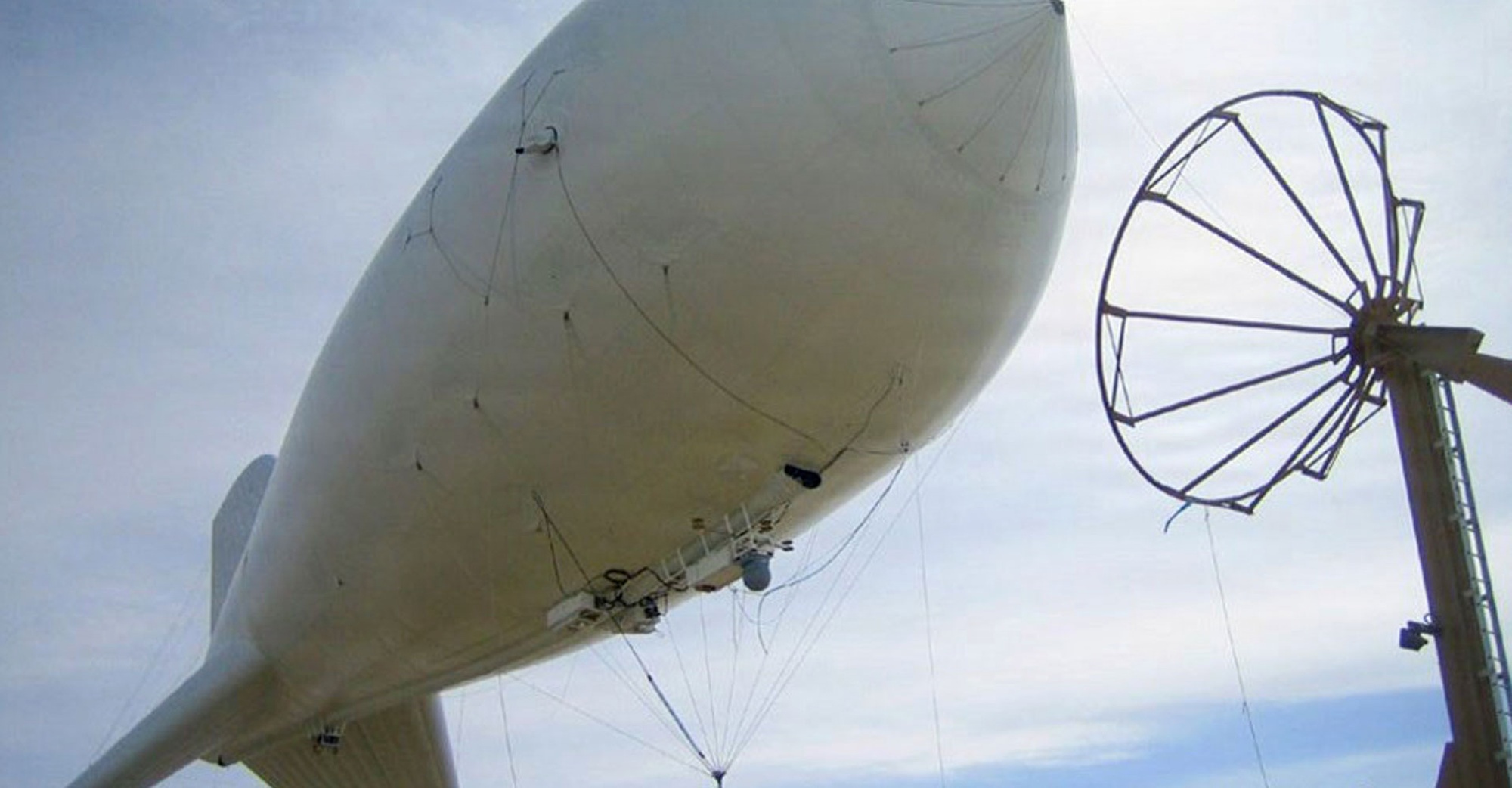
The RASN consists of a 34-meter Aerostat integrated with S-band radar parabolic dish to provide persistent surveillance of small maneuverable air targets. Additionally, the data is coordinated with ground radar systems, called Ku-band Radio Frequency Sensor (KuRFS), which are tower-based AESA and specifically designed for locating, tracking and reporting counter uncrewed aircraft system (cUAS) position information.
SYSTEM INTERDEPENDENCIES:
- The RASN system passes detection/track data to the KuRFS system for a holistic picture of the airborne threat environment.
PROGRAM STATUS:
- Currently working to ensure potentially identified system meets user requirements while generating acquisition documentation for procurement.
PROJECTED ACTIVITIES:
- Receipt of anticipated JUON funding and contract award mid-FY26.
Small Tactical Radar Lightweight (STARLite)
MISSION:
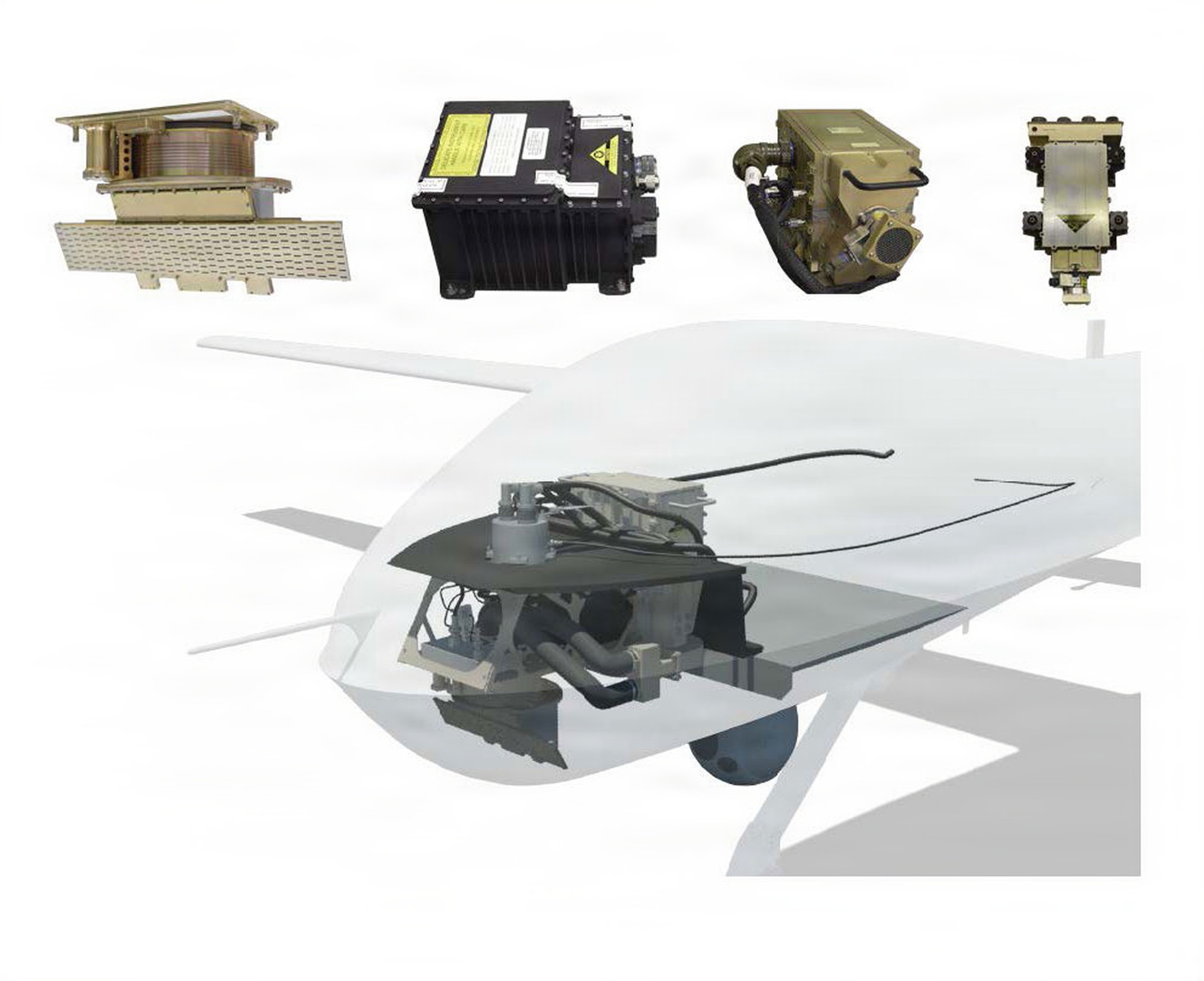
STARLite is a synthetic aperture radar/ground moving target indicator, dismount moving target indicator (SAR/GMTI/DMTI) system, which is a lightweight, high performance, all-weather, multi-functional radar sensor.
DESCRIPTION:
- Payload is capable of on-board processing and transmission of near-real-time imagery and target detection data to the Universal Ground Control Station (UGCS) via a digital data link
- SAR and MTI data can be exploited in the PED and/or the Ground Control Station-Element in the UGCS
- Provides battlefield commanders increased situational awareness through wide area surveillance, imaging of stationary targets, and detection/tracking of moving targets
SYSTEM INTERDEPENDENCIES:
- STARLite and the Common Sensor Payload (CSP) cross-cue on the MQ-1C UAS Gray Eagle
- STARLite provides high-resolution spot mode imagery and high-resolution strip mode imagery up to 20 kilometers
PROGRAM STATUS:
- Post-Milestone C, Fully Fielded, Transitioned to sustainment
PROJECTED ACTIVITIES:
- F26: Continue to provide OEM for FSR support
Small Tactical Radar Lightweight (STARLite)
MULTI-DOMAIN SENSING SYSTEM (MDSS)
Airborne Reconnaissance & Electronic Warfare System (ARES)
MISSION:
ARES is a manned contractor-owned, contractor-operated (COCO) proof of concept aerial ISR technical demonstrator jet, delivering modernized sensor capabilities against near-peer threats and adversaries, operating in the U.S. Pacific Command area of responsibility.
DESCRIPTION:
The objective for the aerial ISR technical demonstrator includes:
- The evaluation of electronic intelligence, communications intelligence, and electronic warfare/attack and cyber effects using a COCO jet that exceed capabilities of the Army’s current programs of record
- Assessing performance of modern sensors flown at high altitudes with the ability to conduct deep sensing during exercises and deployment
- Informing future aerial ISR modernization priorities
- Refining the capability gaps for expeditionary PED
SYSTEM INTERDEPENDENCIES:
- U.S. Army Intelligence and Security Command PED network, CPE ISW sensors, Project Manager Intelligence Systems and Analytics Tactical Intelligence Targeting Access Node (TITAN) (future), CPE Aviation
PROGRAM STATUS:
- Aircraft operationally deployed
PROJECTED ACTIVITIES:
- FY26: Continued deployment and sensor upgrades
Airborne Reconnaissance & Electronic Warfare System (ARES)

Airborne Reconnaissance Targeting Exploitation Mission Intelligence System (ARTEMIS)
MISSION:
ARTEMIS is a manned contractor-owned, contractor-operated (COCO) proof of concept aerial ISR technical demonstrator jet, delivering modernized sensor capabilities against near-peer threats and adversaries, operating in the U.S. European Command area of responsibility.
DESCRIPTION:
The objective for the AISR technical demonstrator includes:
- The evaluation of electronic intelligence, communications intelligence, and electronic warfare/attack and cyber effects using a COCO jet that exceed capabilities of the Army’s current programs of record
- Assessing performance of modern sensors flown at high altitudes with the ability to conduct deep sensing during exercises and deployment
- Informing future aerial ISR modernization priorities
- Refining the capability gaps for expeditionary PED
SYSTEM INTERDEPENDENCIES:
- U.S. Army Intelligence and Security Command PED network, CPE ISW sensors, Project Manager Intelligence Systems and Analytics Tactical Intelligence Targeting Access Node (TITAN) (future), CPE Aviation
PROGRAM STATUS:
- Aircraft operationally deployed
PROJECTED ACTIVITIES:
- FY26: Continued deployment and sensor upgrades
Airborne Reconnaissance Targeting Exploitation Mission Intelligence System (ARTEMIS)

Army Theater-level High Altitude Expeditionary Next Aerial (ATHENA)
MISSION:
The U.S. Army Theater-Level High Altitude Expeditionary Next A-ISR (ATHENA) systems are manned Contractor Owned, Contractor Operated (COCO) Aerial Intelligence, Surveillance, and Reconnaissance (A-ISR) jet platforms provided to the U.S. Army Combatant Commanders to facilitate Multi- Domain Operation (MDO) ISR operational mission executions. ATHENA platforms support a Headquarters Department of the U.S. Army G-2 A-ISR bridging strategy from Fiscal Year (FY) 2024 (FY24) to FY29, enabling the transition from legacy A-ISR assets to the U.S. Army’s Program of Record (POR) High Accuracy Detection, Exploitation System (HADES) forecasted fielding. The systems will host a variety of Government-provided near-peer optimized sensor systems and be employed by operational commanders against emergent threats in Central Asia, Europe, Middle East, South America, Africa, and the Indo-Pacific areas of operation. In partnership with the FEDSIM, FWPO is addressing the U.S. Army’s global A-ISR gaps with rapid system procurement, integration, testing, and operational employment of manned A-ISR capable platforms. The ATHENA jet platform is the implementation of the U.S. Army strategy to conduct persistent ISR Mission Operations in the air domain as a globally deployable A-ISR service, with high- altitude, near-peer optimized sensor capabilities able to be hosted on a jet aircraft. The A-ISR service will be a COCO service that directly supports the collection priorities, as directed by the Combatant Commander(s).
DESCRIPTION:
Army Theater Level High-Altitude Expeditionary Next-Generation A-ISR (ATHENA) is a missionized, high-speed, and near- peer-optimized aerial sensor solution, capable of globally deployable operations, and will fill urgent A-ISR capabilities gaps needed to enable Army and Joint Forces to compete in Multi-Domain Operations (MDO). There are four (4) ATHENA aircraft in two (2) distinct configurations to support Signals Intelligence (SIGINT), ATHENA-S, and Radar missions, ATHENA-R.
SYSTEM INTERDEPENDENCIES:
U.S. Army Intelligence and Security Command PED network, CPE ISW sensors, Project Manager Intelligence Systems and Analytics Tactical Intelligence Targeting Access Node (TITAN) (future), CPE Aviation
PROGRAM STATUS:
- 2x ATHENA-R aircraft operationally deployed
- 2x ATHENA-S aircraft undergoing final testing preparing for deployment
PROJECTED ACTIVITIES:
- 2QFY26: Deploy 2x ATHENA-S deploy to perform operational missions
- FY26: 4x aircraft continued deployment and sensor upgrades
Army Theater-level High Altitude Expeditionary Next Aerial (ATHENA)

High Accuracy Detection and Exploitation System (HADES)
MISSION:
The MDSS HADES will be a multi-faceted sensing capability on higher altitude, longer endurance manned platforms (e.g., business jets) that can provide stand-off from enemy anti-access/area denial systems. HADES will address Army requirements for medium to high altitude aerial ISR capabilities to rapidly gain and maintain situational understanding, freedom of maneuver, overmatch, and decision advantage in Multi-Domain Operations.
DESCRIPTION:
- Flexible and integrated platforms, payloads, data transport, and enhanced analysis capabilities
- Ability to conduct deep sensing to recognize, identify, track, and geo-locate targets
- Sensor-to-shooter links to shorten the kill chain and operate at the tempo and volume of large-scale ground combat operations
- Near-real-time products via on-board data processing using artificial intelligence and advanced data processing
- Initial capabilities will include electronic intelligence, communications intelligence, and synthetic aperture radar/moving target indicator sensing
- Follow-on capabilities will include cyber, electronic warfare, and air-launched effects
SYSTEM INTERDEPENDENCIES:
- U.S. Army Intelligence and Security Command PED network, CPE ISW sensors, Project Manager Intelligence Systems and Analytics Tactical Intelligence Targeting Access Node (TITAN) (future), CPE Aviation
PROGRAM STATUS:
- Program Type:
- Middle-Tier Acquisition Prototyping Program
- Requirement Trace:
- MDSS Initial Capabilities Document (ICD) validated by the Joint Requirements Oversight Council Memorandum (JROCM)-107-19 on 19 November 2019
- MDSS ICD U.S. Army Futures Command approved, 24 February 2020
- MDSS HADES Abbreviated Capability Development Document (A-CDD) validated by the Army Requirements Oversight Council Memorandum (AROCM) 20-20 on 26 August 2020
- Acquisition Phase: Pre-Milestone A
- Fielding Plan: TBD, Manning and equipment profiles pending analysis of alternatives decision
PROJECTED ACTIVITIES:
- FY26: Completion of System Prototype 1 Integration and Testing
- FY26: System Prototype 2 Integration and Contractor Testing
- FY26: Initiation of Middle-Tier Acquisition Rapid Prototyping 2 for System Prototype 3
High Accuracy Detection and Exploitation System (HADES)