


MISSION:
Support current combat operations and U.S. Army modernization through timely delivery and deployment of an array of terrestrial sensor capabilities.
VISION:
Ensure battlefield dominance by delivering the most advanced ground sensors in the world.
DESCRIPTION:
Project Manager Terrestrial Sensors leads the Army’s development, procurement, fielding, training for, and sustainment of best-in-class ground sensors that enable robust surveillance, reconnaissance, and target acquisition. The PM provides deep subject matter expertise in sensor technologies and maintains key relationships with associated industry partners. Standard integration across numerous Army platforms through the PM enables both the efficacy and efficiency of sensor development, procurement, and sustainment. The PM also manages a suite of sensor-driven capabilities that directly support engineers in conducting geographical surveys and similar data gathering activities that significantly contribute to a holistic understanding of the battlefield.
MR. THOMAS J. DUNAWAY

Mr. Thomas J. Dunaway assumed the role of Project Manager for Terrestrial Sensors in June 2026. In this capacity, he leads an organization responsible for the development, procurement, fielding, training, and sustainment o advanced ground sensor capabilities that enhance Army surveillance, reconnaissance, target acquisition, and multidomain operational effectiveness.
Mr. Dunaway previously served as a Project Officer within the Office of the Assistant Secretary of the Army for Acquisition, Logistics and Technology (ASA(ALT)) Operations team at the Pentagon. In this role, he coordinated enterprise-level operational activities and supported senior leader decision-making across the Army acquisition enterprise, including the development of the ASA(ALT) Operations Center, designed to improve real-time situational awareness, integration, and executive decision support.
From 2021 to 2024, Mr. Dunaway served as a Centralized Selection List Product Manager for Global Enterprise Network Modernization–OCONUS within the Integrated Enterprise Network portfolio. He led a globally dispersed workforce of more than 100 personnel responsible for delivering secure communications and unified network capabilities across U.S. Africa Command, Central Command, European Command, and Indo-Pacific Command. Under his leadership, the organization enhanced the resiliency, security, and operational effectiveness of the Army’s united network infrastructure, strengthening mission command, improving interoperability with Joint and coalition partners, and enabling Combatant Commanders to execute operations across multiple theaters. His efforts directly advanced Army network modernization priorities and increased the readiness of forward-stationed and deployed forces worldwide.
Mr. Dunaway’s previous assignments include key leadership positions both CONUS and OCONUS within Program Executive Office Enterprise Information Systems (PEO EIS) and Program Executive Office Command, Control, and Communications-Tactical (PEO C3T), where he was responsible for complex portfolios spanning global communications, infrastructure modernization, and enterprise IT services. During his military career, he served in numerous operational leadership roles in the 2nd Battalion, 4th Field Artillery Regiment, including Multiple Launch Rocket System (MLRS) Platoon Leader (with deployment in support of Operation Iraqi Freedom), Executive Officer, Battalion Maintenance Officer, and Battalion Logistics Officer.
Mr. Dunaway’s awards and honors include the Bronze Star Medal, the Meritorious Civilian Service Medal, the Civilian Service Commendation Medal, and multiple Army Achievement Medals. He is a member of the Army Acquisition Corps and holds Advanced Certification in Program Management.
Mr. Dunaway is a 2001 graduate of the United States Military Academy, where he earned a Bachelor of Science in Systems Engineering and was commissioned as a Field Artillery officer. He holds a Master of Science in Sports Management from California University of Pennsylvania and a Master of Strategic Studies from the U.S. Army War College, where he graduated in 2025.
 |
|
MR. JERORD WILSON

Mr. Jerord “Jerry” E. Wilson is the current Deputy Project Manager, Terrestrial Sensors. Mr. Wilson is responsible for the development, platform integration, upgrade, testing, fielding, and sustainment of Programs of Record (POR) and Quick Reaction Capabilities (QRCs) to meet urgent Warfighter requirements.
As an Army Officer and a Department of the Army Civilian with over 34 years of Federal Service, Mr. Wilson has held numerous key leadership positions, such as: Team Leader, Squad Leader, Platoon Leader, Airborne Infantry Assistant S-3, Airborne Infantry Rifle Company Commander, Army Infantry Branch Officer, Strategic Communication Operations Officer, Assistant Product Manager, Associate Director for Technologies/ International programs, and Deputy Product Manager. Mr. Wilson has served in two (2) combat operations, Operation Just Cause (Panama) and Operation Iraqi Freedom (OIF).
In 2017, Mr. Wilson was named one of the Command, Control, Communications, Computers, Intelligence, Surveillance and Reconnaissance (C4ISR) Top Ten Employees of the Year. His military and civilian awards include the Legion of Merit medal, Bronze Star medal, U.S. Army RANGER Tab, Army Meritorious Service Medal (4th Award), Combat Infantryman’s Badge (2nd Award), Expert Infantryman’s Badge, Airborne Badge, Air Assault Badge, Drill Sergeant Badge, the Infantry Order of Saint Maurice Medal (Centurion), and the Superior Medal for Civilian Service.
Mr. Wilson is a graduate of the U.S. Army Ranger School, the Army Civilian Advanced Course, and the Defense Acquisition University Senior Service College. He holds a Bachelor of Arts degree in Computer Information System Management from Colorado Christian University and a Master of Arts Degree in Procurement and Acquisitions from Webster University. He is DAWIA certified Level III in Project Management and Level I in Information Technology.
|
|
LATEST PM TS NEWS
RESOURCES
PM TS SOCIAL MEDIA

BIOMETRICS

COMBAT TERRAIN INFORMATION SYSTEM (CTIS)

FORCE PROTECTION SYSTEMS (FPS)
Programs
Biometrics
DoW Automated Biometric Identification System (ABIS)
MISSION:
DoW ABIS is a system that collects, stores, matches, and shares biometric data (such as fingerprints, palm prints, iris scans, and facial scans) from persons of interest globally. It is used to identify and verify potential threats to national security and support military operations. It provides 24/7 operational support and uses specialized software and biometric examiners for manual matching.
DESCRIPTION:
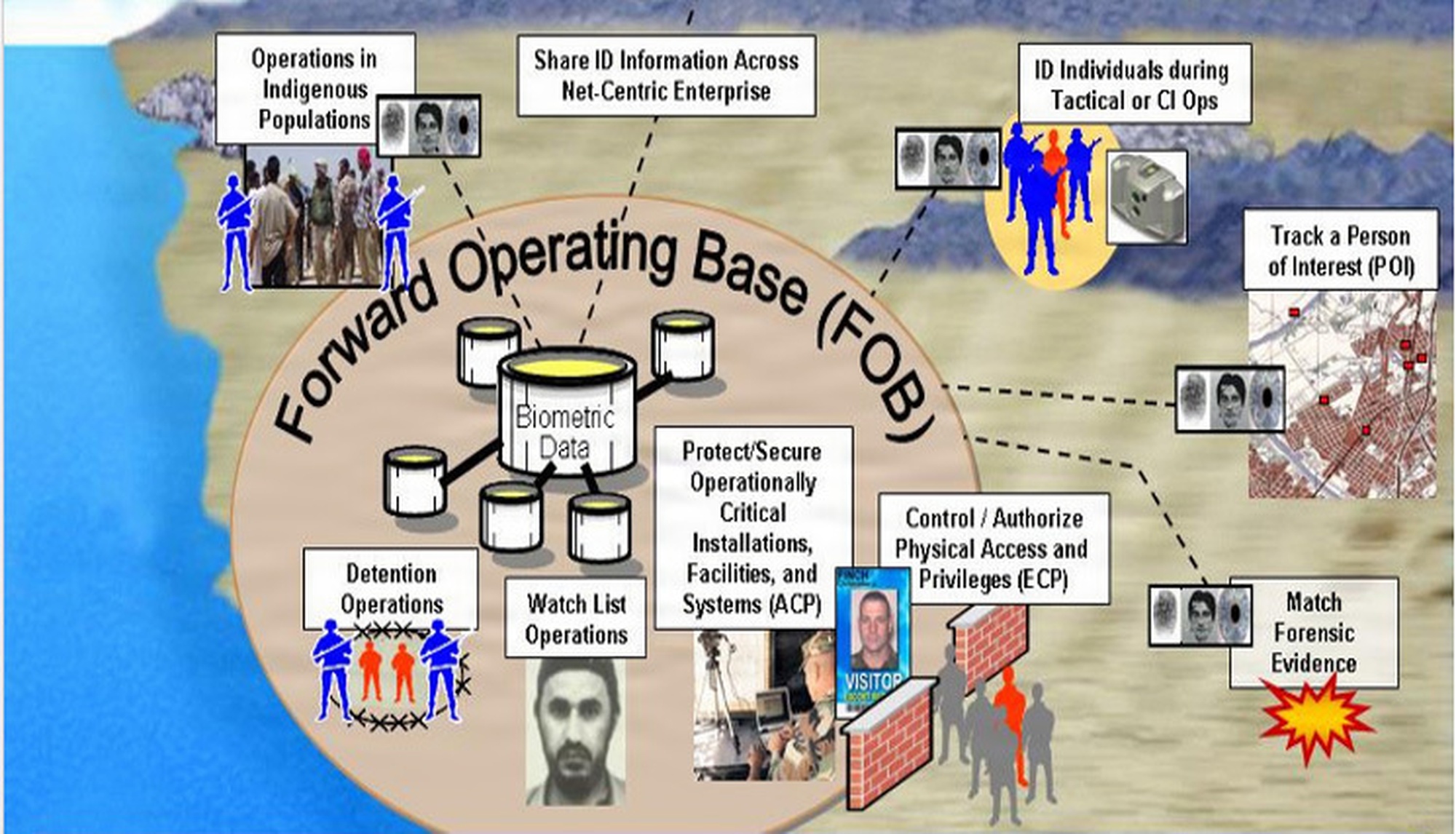
Biometrics matching capabilities allow the Warfighter to accurately identify, target, deny access, and/or detain known or suspected adversaries around the globe. To support this mission, DoW ABIS serves as the authoritative repository for biometrics data collected from known and suspected terrorists and persons of interest. It is used by all the Services, Geographic Combatant Commands, Special Operations forces, and the Intelligence Community. The current DoW ABIS v1.3 system matches, stores, and shares four biometric modalities: fingerprint, facial images, palm-print, and iris patterns. The next generation DoW ABIS v2.0 will add the voice modality. The system enables force protection, intelligence, physical and logical access control, identity management, and detection and interception operations. It features integrated commercial-off-the-shelf (COTS) and Government-off-the-shelf (GOTS) products, using open architecture to minimize development and speed deployment. DoW ABIS interfaces with numerous DoW and interagency biometrics systems, including Department of Justice (DoJ), Federal Bureau of Investigation (FBI), Department of Homeland Security (DHS), and Department of State (DoS).
SYSTEM INTERDEPENDENCIES:
- DoW ABIS interfaces with other government agencies, partner nations, and physical access control systems (PACS) at military installations to obtain and share biometric data
PROGRAM STATUS:
- BEC 1 program for development of next generation DoW ABIS v2.0 achieved successful Milestone B decision in JAN 22
- Awarded new contract for continued DoW ABIS sustainment and next generation development in JUN 22
- Received 2022 Best Technical Advancement Award for new DoW ABIS Watch Listing Capability at Federal Identity Conference in SEP 22
PROJECTED ACTIVITIES:
- DoW ABIS first “Capability Drop” of system enhancements planned for deployment not later than 4Q FY24
Biometrics Automated Toolset – Army (BAT-A)
MISSION:
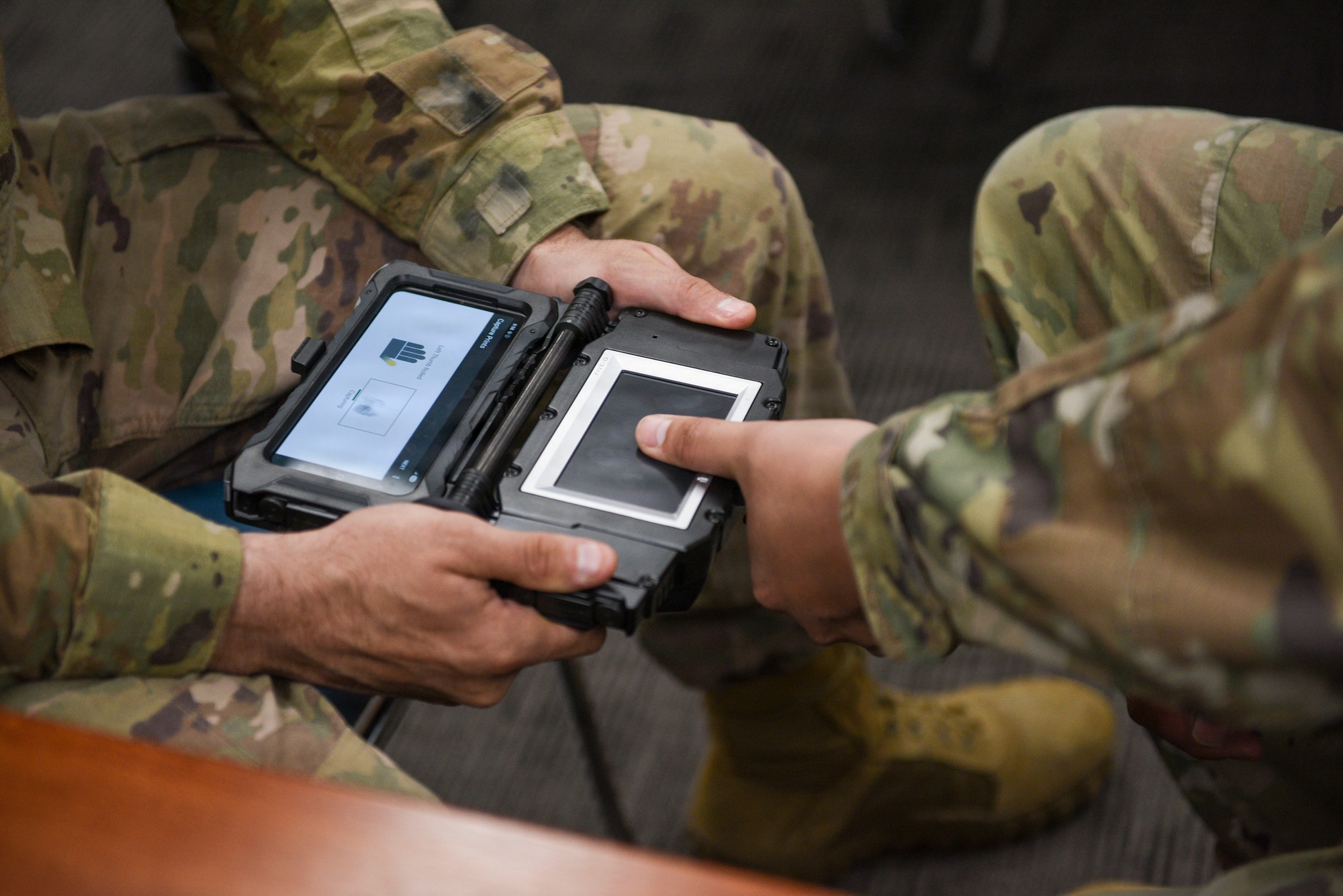
The Army POR for biometric tactical collection capability is presently the Biometrics Automated Toolset-Army (BAT-A). It consists of the BAT-A Kit, BAT-A Handheld (BAT-HH) and BAT-A Web Service. BAT-A provides the warfighter with the information to decide and act with persistent identification of individuals across the battlespace.
DESCRIPTION:
- Enables development of actionable identity intelligence against High Value Individuals.
- Enables identification of personnel conducting counter adversarial unconventional warfare operations, including espionage, sabotage, and other coercive actions against US forces and partner nations to prevent collection of Essential Elements of Friendly Information.
- Enables biometric processing of Enemy Prisoners of War and detainees to verify and validate identity.
- Enables identification of Threat-Actors in or near population centers and sanctuary areas (Deny enemy mobility to operate).
- Enables identification of Threat-Actors attempting to access facilities, critical infrastructure & events (Protect friendly forces).
SYSTEM INTERDEPENDENCIES:
- BAT-A interfaces with the National Ground Intelligence Center and the DoW Automated Biometrics Identification System (DoW ABIS).
PROGRAM STATUS:
- Post Milestone-C – In Sustainment
PROJECTED ACTIVITIES:
- FY29 – End of Useful Life
Biometrics Automated Toolset – Army (BAT-A)
Biometrics Enabling Capability (BEC 1)
MISSION:
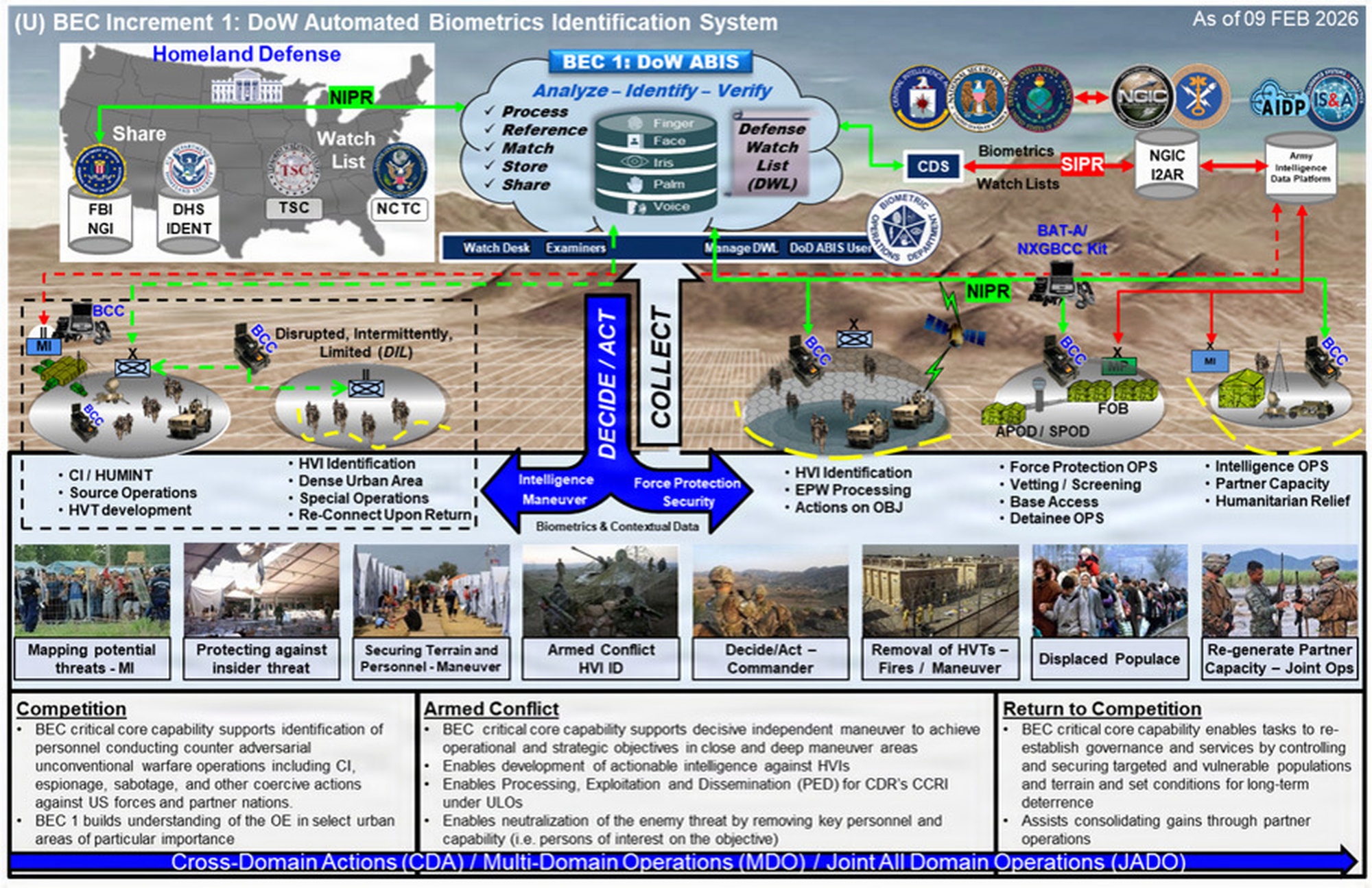
DoW ABIS is a fully operational, standards based biometric system of one residing in the Army Military Intelligence Cloud Computing Service Provider (AC2SP) GovCloud that matches, stores, and shares biometric data (fingerprints, palm prints, iris images, facial images and voice) from persons of interest globally. It is used to identify and verify potential threats to national security, support military operations, and enhance force protection. It provides 24/7 operational availability using state-of-the-art biometric algorithms and customized software applications.
DESCRIPTION:
Biometrics matching capabilities allow the Warfighter to accurately identify, target, deny access, and/or detain known or suspected adversaries around the globe. To support this mission, DoW ABIS serves as the authoritative repository for biometrics data collected from known and suspected terrorists and persons of interest. The DoW ABIS biometrically enables and facilitates the sharing of the Defense Watch List (DWL) It is used by all the Services, Geographic Combatant Commands, Special Operations forces, and the Intelligence Community. The DoW ABIS v2.0 system is a fully GovCloud based system that matches, stores, and shares five biometric modalities: fingerprint, facial images, palm-print, iris images, and voice. The system is accessible worldwide and enables force protection, intelligence, physical and logical access control, identity management, and detection and interception operations. It features integrated commercial-off-the-shelf (COTS) and Government-off-the-shelf (GOTS) products, using open architecture to minimize development and speed deployment. DoW ABIS interfaces with numerous DoW and interagency biometrics systems, including Department of Justice (DoJ), Federal Bureau of Investigation (FBI), Department of Homeland Security (DHS), and Department of State (DoS).
SYSTEM INTERDEPENDENCIES:
- DoW ABIS interfaces with other government agencies, partner nations, and physical access control systems (PACS) at military installations to obtain and share biometric data.
PROGRAM STATUS:
- Achieved successful Milestone B decision for the BEC 1 program for development of next generation in JAN 22.
- Awarded new contract for continued DoW ABIS sustainment and next generation development in JUN 22
- Received 2022 Best Technical Advancement Award for new DoW ABIS Watch Listing Capability at Federal Identity Conference in SEP 22
PROJECTED ACTIVITIES:
- The first “Capability Drop” of DoW ABIS enhancements planned for deployment is not later than 4Q FY24.
Biometrics Enabling Capability (BEC 1)
Near Real Time Identity Operations (NRTIO)
MISSION:
NRTIO provides the Warfighter an enhanced ability to collect, store and share biometric data in near real time.
DESCRIPTION:
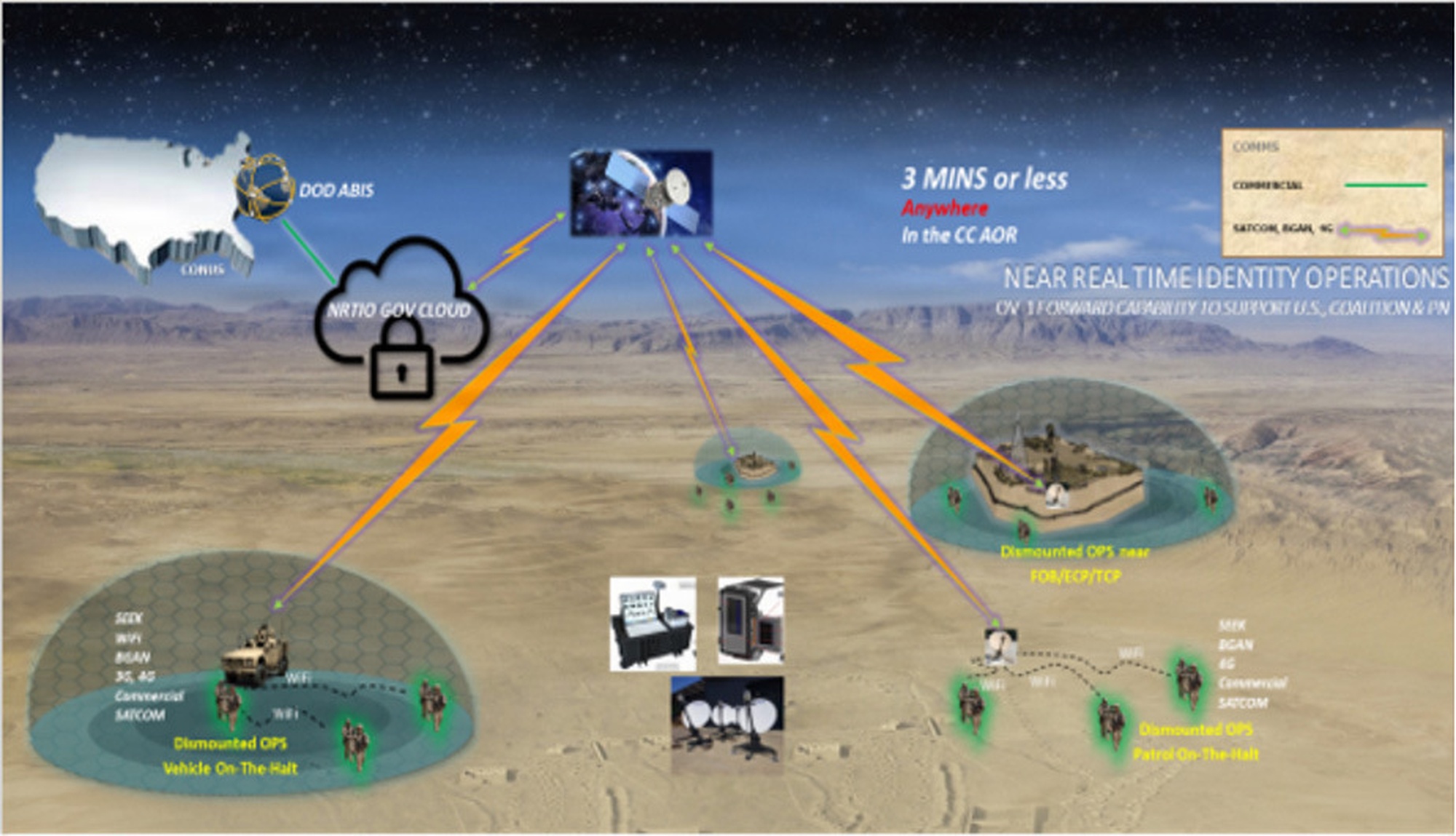
NRTIO provides the Warfighter the ability to collect, match, and share biometric data in the CENTCOM AOR. Providing Identity Dominance in the battlespace, NRTIO allows Warfighter to compare collected biometric data against the Biometric Enabled Watch List; and provides rapid identity verification and alerts in less than a minute. This capability informs Force Protection decisions in Operation Inherent Resolve.
- Supports Multi-Domain Operations by processing enemy prisoners of war, displaced persons and refugees and assists operations in support of consolidated areas.
- Uses biometrics as a sensor to enable intelligence collection, analysis, and protects expeditionary forces while building combat power.
- Establishes an individual’s identity in a high threat tactical environment and is portable enough to relocate in minutes as operations require.
SYSTEM INTERDEPENDENCIES:
- NRTIO interfaces with DoW Automated Biometrics Identification System (ABIS)
PROGRAM STATUS:
- Quick Reaction Capability
PROJECTED ACTIVITIES:
- N/A
Near Real Time Identity Operations (NRTIO)
Next Generation Biometric Collection Capability (NXGBCC)
MISSION:
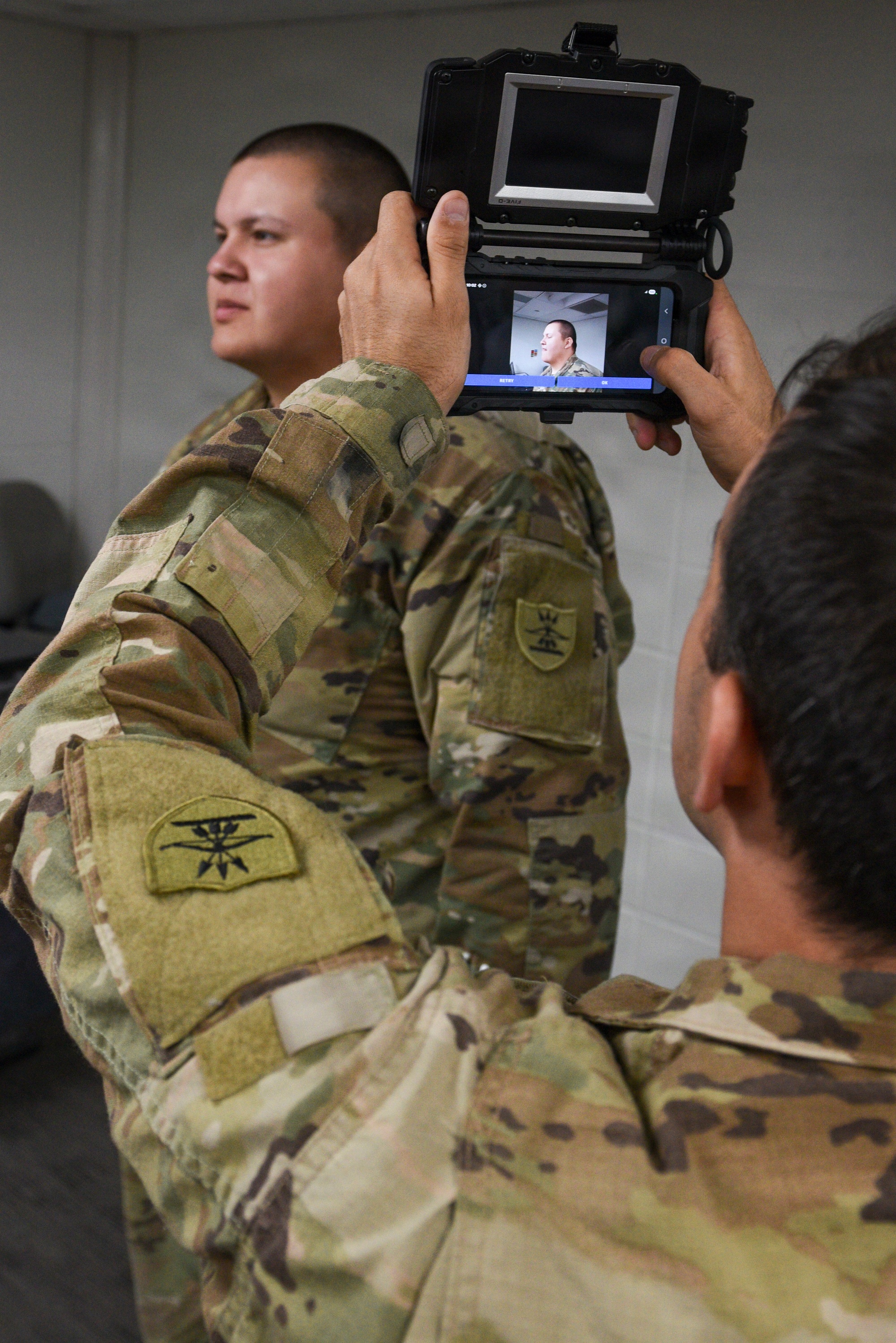
NXGBCC is the planned successor to the BAT-A (Biometrics Automated Toolset – Army) Program of Record and the Near Real Time Identity Operations (NRTIO) Quick Reaction Capability. NXGBCC provides Commanders with enhanced situational awareness, exploitation, and analysis capabilities using biometrics in near real time. Biometric data enables the joint force to conduct Force Protection and Military Intelligence activities involving identification of combatants, managing enemy prisoners of war, civilian detainees, displaced persons, and refugees during Large Scale Combat Operations.
DESCRIPTION:
NXGBCC collects, matches, stores, shares, analyzes, and regionalizes biometric, biographical, and contextual data through fingerprint, iris, voice, and facial modalities.
SYSTEM INTERDEPENDENCIES:
- Supports Multi-Domain Operations by processing enemy prisoners of war, displaced persons, and refugees and assisting operations in support of consolidated areas.
- Uses biometrics as a sensor to enable intelligence collection and analysis, and to protect expeditionary forces while building combat power.
- Establishes an individual’s identity in a high threat tactical environment and is portable enough to relocate in minutes as operations require.
PROGRAM STATUS:
- On 28 MAY 2026, Next Generation Biometric Collection Capability (NXGBCC) met Initial Operational Capability (IOC).
PROJECTED ACTIVITIES:
- New Equipment Training (NET) throughout FY26
- 3QFY26 Biometric Production and Sustainment (BPS) Contract Award
Next Generation Biometric Collection Capability (NXGBCC)
Gate Keeper on the Move - Biometrics (GOTM-B)
MISSION:
To provide DoW, Partner Nations, and Coalition Forces with a scalable, modular, deployable and interoperable system with contact-less biometric gathering for rapid identification.
DESCRIPTION:
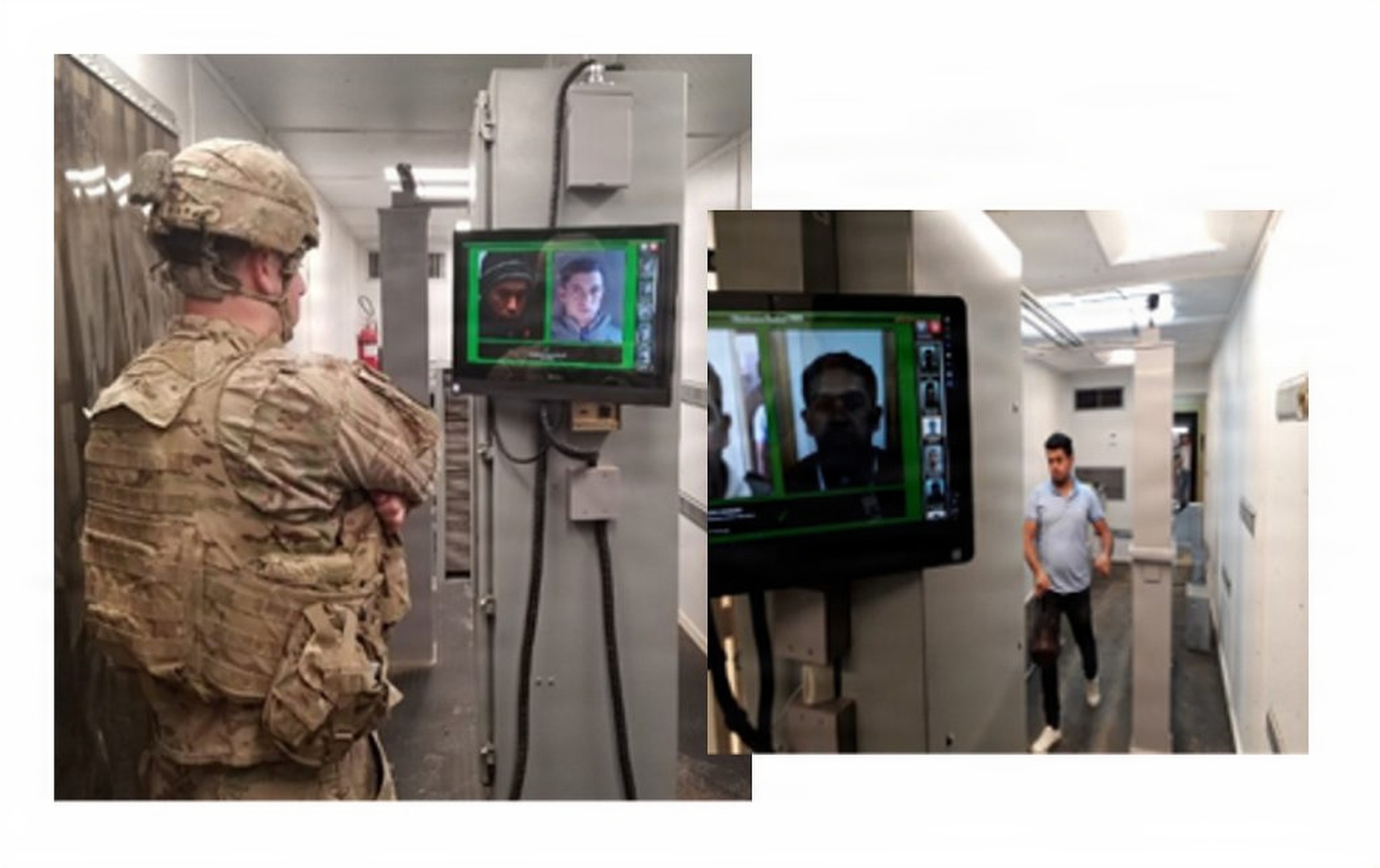
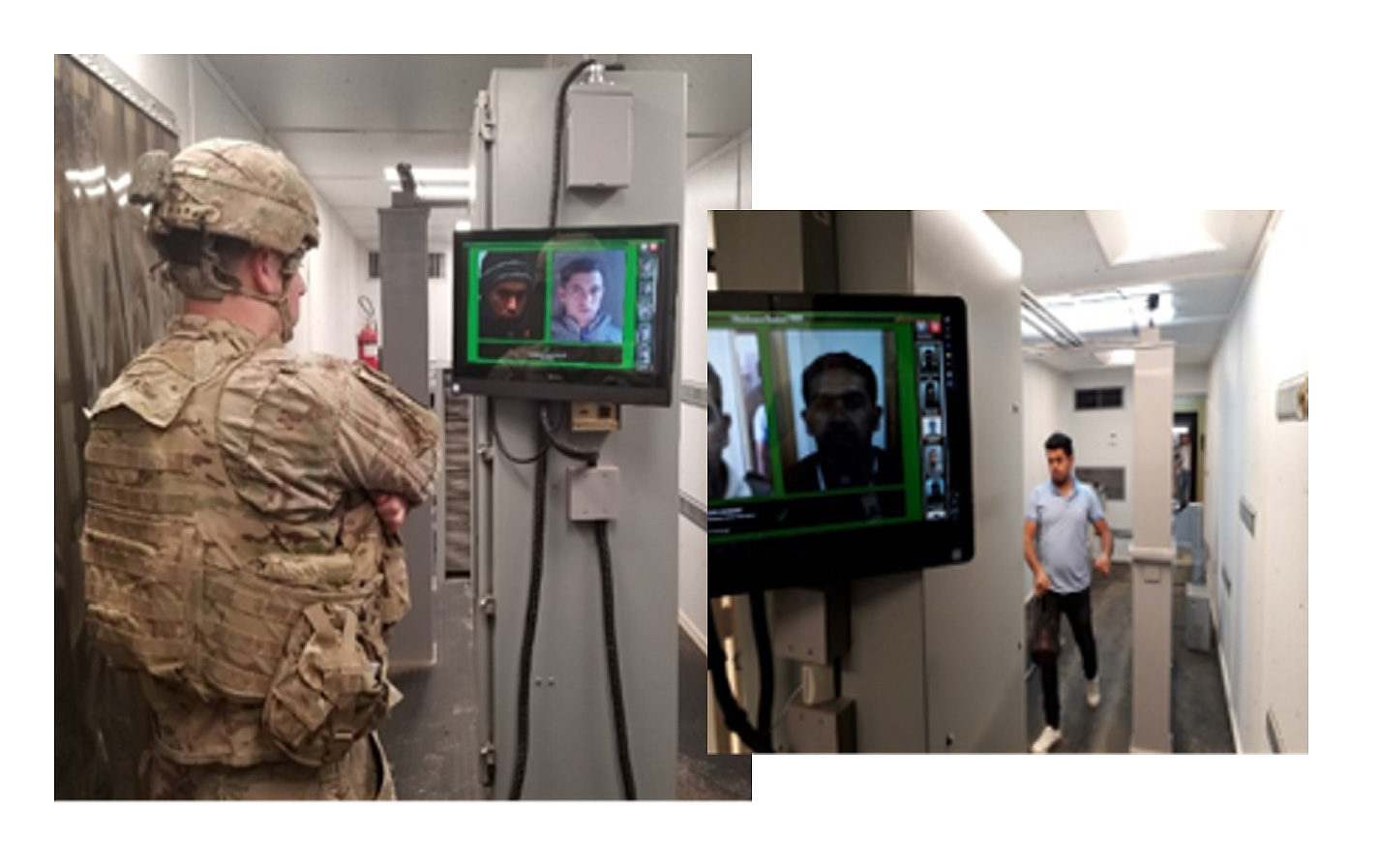
GOTM-B is an integrated, multi-modal Biometric non-stop entry system using biometric technologies. The GOTM-B System is scalable, modular, deployable, and customizable for DoW and Interagency Enterprises and is interoperable with other government systems and databases.
- Physical Access Control Systems (PACS) with contact-less biometrics (face, fingers and iris) for rapid and non-stop identification and matching of personnel.
- Located at entry control points, screens 350,000 Other Country Nationals annually.
- System downloads Biometric Enabled Watch List 3x’s a week.
SYSTEM INTERDEPENDENCIES:
- GOTM-B interoperates with several government systems and databases
PROGRAM STATUS:
- Quick Reaction Capability
- Urgent Capability Acquisition- Operations and Sustainment
PROJECTED ACTIVITIES:
- N/A
Gate Keeper on the Move – Biometrics (GOTM-B)
Combat Terrain Information Systems (CTIS)
Global Positioning System – Survey (GPS-S)
MISSION:
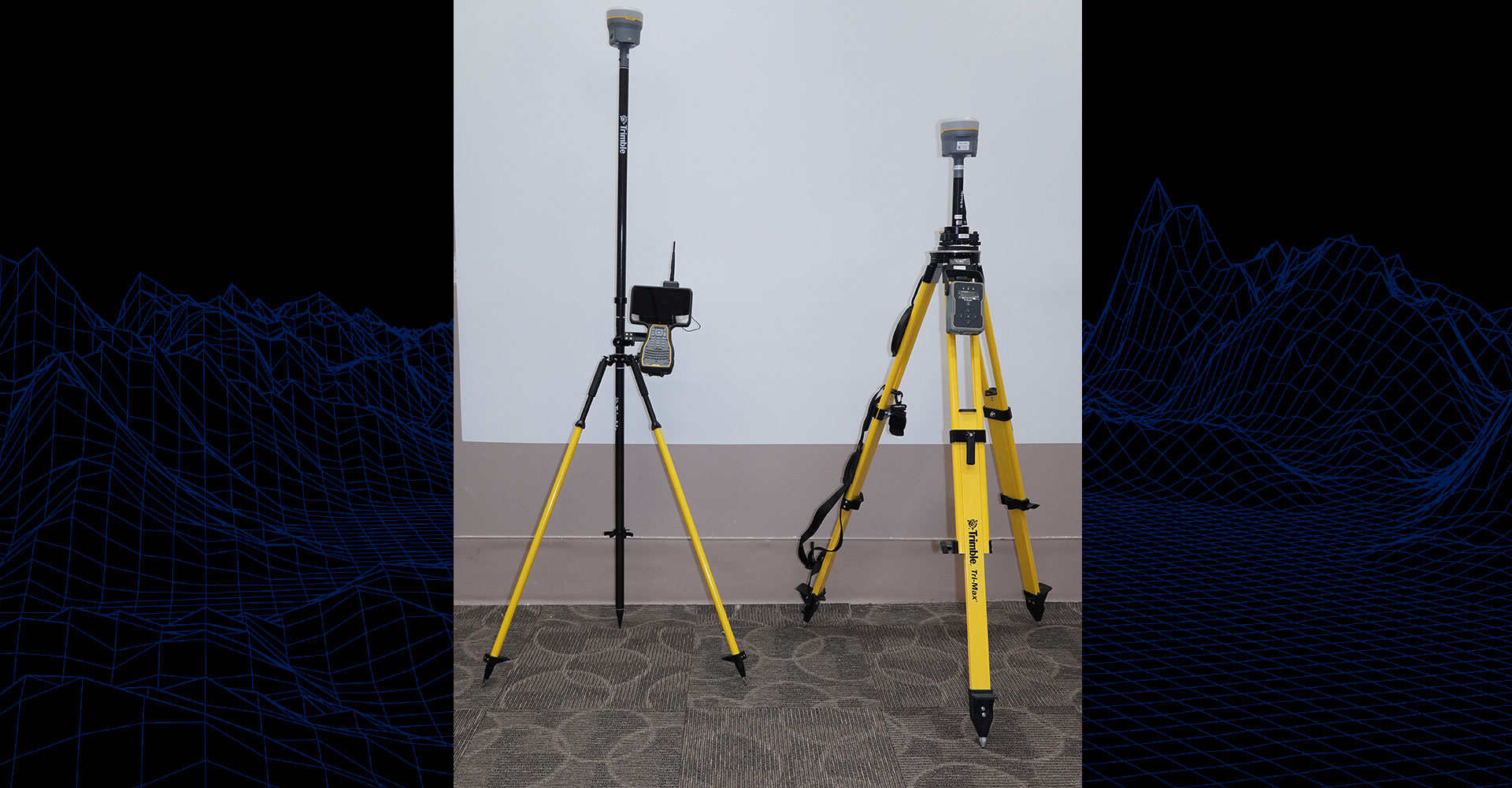
GPS-Survey (GPS-S) supports Technical Engineer (MOS 12T) accomplishment of construction and topographic surveys with centimeter level precision and has integrated SAASM capability that satisfies OSD Policy for operations in degraded and contested environments.
DESCRIPTION:
GPS-S enables Engineer Survey & Design and Army Dive Teams to develop accurate position location and surface profiles to support critical safety of navigation, obstacle and sensor placement, runway layout and repair, construction and maintenance, hydrographic/topographic surveys that feed planning and analysis tasks for maneuver forces. This equipment is foundational to Army Technical Engineers (MOS 12T) and Army Divers (MOS 12D) METL.
SYSTEM INTERDEPENDENCIES:
- GPS-S interfaces with current Army Survey equipment to perform integrated GPS/optical surveys and with the Instrument Set, Reconnaissance and Surveying (ENFIRE) tablet PC for post processing of survey data and import of survey design files
PROGRAM STATUS:
- Post Milestone C
PROJECTED ACTIVITIES:
- Fieldings
Global Positioning System – Survey (GPS-S)
Instrument Set, Reconnaissance and Surveying (Common Name: ENFIRE)
MISSION:
Instrument Set, Reconnaissance and Surveying (common name: ENFIRE) is a digital technology upgrade to the analog Survey Set, Military Field Sketching legacy capabilities. ENFIRE enables the performance of reconnaissance, construction management, project management, field surveying, facilities management, inventory management, obstacle planning and field engineering tasks by soldiers in CMF 12. The set utilizes standard military communications devices to transfer data files to the Army Mission Command suite of warfighting capabilities.
DESCRIPTION:
ENFIRE enables maneuver forces by expediting hasty/deliberate route, area, and zone reconnaissance, route clearance, hazard identification, inventory, and construction management efforts through the integration of digital tools into a single platform. ENFIRE has evolved into the common computing platform for the Regiment enabling reconnaissance, route clearance, obstacle planning/reporting, construction management, survey support and terrain shaping and analysis.
SYSTEM INTERDEPENDENCIES:
- N/A
PROGRAM STATUS:
- Post Milestone C
PROJECTED ACTIVITIES:
- System Upgrades
- Fieldings
Instrument Set, Reconnaissance and Surveying (Common Name: ENFIRE)
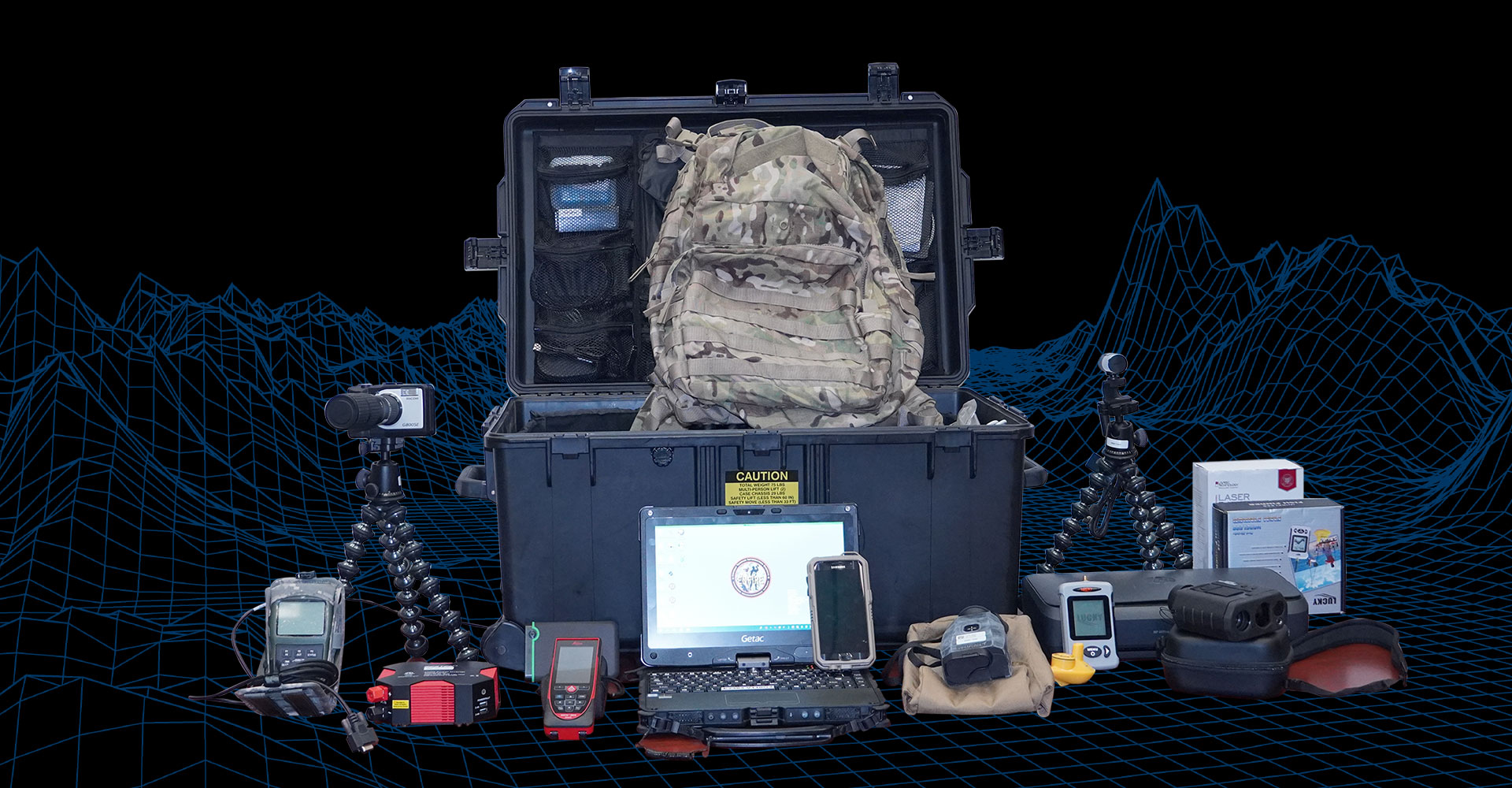
The Automated Integrated Survey Instrument (AISI)
MISSION:
The Automated Integrated Survey Instrument (AISI) is a non-developmental item (NDI) used to collect, store, retrieve, and process survey data. It is a COTS advanced surveying instrument that combines traditional land survey tools into a single auto-tracking, robotic 3D scanning total station which affords efficiency of effort that leads to less time on target. AISI can be used with other collection devices, such as GPS and HD LiDAR Scanners further enhancing analysis and utility of the collected data. This equipment is foundational for Army Technical Engineers (MOS 12T) METL.
DESCRIPTION:
AISI provides the military surveyor with a single instrument (total station) to achieve all functions formally carried out with theodolites, tapes, and distance measuring devices significantly increases the speed of survey operations and mitigation of human recording and computing errors. It automatically stores field survey data for integration to Computer Aided Design (CAD) systems.
SYSTEM INTERDEPENDENCIES:
- Interoperable with Global Positioning System – Survey (GPS-S) and ENFIRE
PROGRAM STATUS:
- Post Milestone C
PROJECTED ACTIVITIES:
- Sustainment (fieldings completed)
The Automated Integrated Survey Instrument (AISI)

Force Protection Systems (FPS)
Automated Installation Entry (AIE)
MISSION:
AIE enhances Installation security through automated personnel verification and authentication using a Joint Service Architecture and authoritative databases to continuously vet personnel against possible criminal, terrorist and insider threats
DESCRIPTION:
The Automated Installation Entry (AIE) system is a critical security capability used across Army installations to protect forces and support mission readiness. AIE enables security forces to manage access control by vetting individuals, authenticating identities, and determining fitness for access based on public law, regulatory requirements, and authoritative data sources. Currently on mission at 99 installations, AIE is projected to expand its operational footprint to 201 locations over the next five years with an additional 102 fielding locations planned worldwide.
SYSTEM INTERDEPENDENCIES:
-
AIE interfaces with various authoritative federal, state, and local databases.
PROGRAM STATUS:
- Production and Deployment Phase 4: Business System Acquisition, Testing & Deployment
PROJECTED ACTIVITIES:
- Continued fielding to locations on the Army Priority List (APL)
- AIE is planning to field at an additional 102 locations in the EUCOM and INDO-PACOM AORs and CONUS under the AIE-Next contract
Automated Installation Entry (AIE)

Base Expeditionary Targeting Surveillance Systems – Combined (BETSS-C)
MISSION:
BETSS-C delivers an elevated surveillance system providing 24/7, 360° visual coverage with Electro-Optical/Infrared (EO/IR) cameras for detection and assessment of potential threats.
DESCRIPTION:
BETSS-C is a family of elevated, local area, rapidly emplaced force protection surveillance systems providing 24/7, 360° visual coverage using long range Electro-Optical/Infrared and radar sensor payload allowing detection and assessment of ground-based targets with integrated slew to cue capabilities. The systems offer day/night detection ranges by elevating the camera above ground level, maximizing the line-of-sight intrusion detection, recognition, and identification capabilities.
SYSTEM INTERDEPENDENCIES:
- N/A
PROGRAM STATUS:
- Operations and Sustainment
PROJECTED ACTIVITIES:
- Continued system sustainment and support for emerging requirements
Base Expeditionary Targeting Surveillance Systems – Combined (BETSS-C)

Counter Vehicle-Borne Improvised Explosive Device (C-VBIED)
MISSION:
To provide an advanced suite of Entry Control detection sensing technologies to alert Security Personnel to the presence of Vehicle-Borne IED (VBIED) and materials of interest (MOI) that threaten bases, forward operating bases, and critical infrastructure.
DESCRIPTION:
C-VBIED is a System of Systems (SoS) developed to detect Vehicle-Borne Improvised Explosive Device (VBIED) and other anomalies prior to a vehicle entering a Forward Operating Base (FOBs). It can be operated as a stand-alone capability or integrated into the Integrated Base Defense-Kitting (IBD-K) SoS.
C-VBIED consists of the Automated Vehicle Inspection System (AVIS) which uses a high-definition camera that captures and stores images of a vehicle’s undercarriage. The AVIS Gatekeeper software is capable of identifying and alerting Operators to anomalies to a vehicle’s undercarriage, as well as an integrated license plate reader and driver camera.
SYSTEM INTERDEPENDENCIES:
- N/A
PROGRAM STATUS:
- Operations and Sustainment
PROJECTED ACTIVITIES:
- Continued system sustainment and support for emerging requirements
Counter Vehicle-Borne Improvised Explosive Device (C-VBIED)

Entry Control Point (ECP)
MISSION:
To enhance base protective posture, assess threats, deny enemy access, and provide stand-off by controlling vehicle and personnel access through a system of systems approach.
DESCRIPTION:
ECP is an integrated System of Systems that enhances Force Protection capability against Vehicle-Borne Improvised Explosive Devices (VBIED) and Personnel-Borne IED (PBIED) threats at Entry Control Points to Forward Operating Bases (FOB).
SYSTEM INTERDEPENDENCIES:
- N/A
PROGRAM STATUS:
- Operations and Sustainment
PROJECTED ACTIVITIES:
- Continued system sustainment and support for emerging requirements
Entry Control Point (ECP)
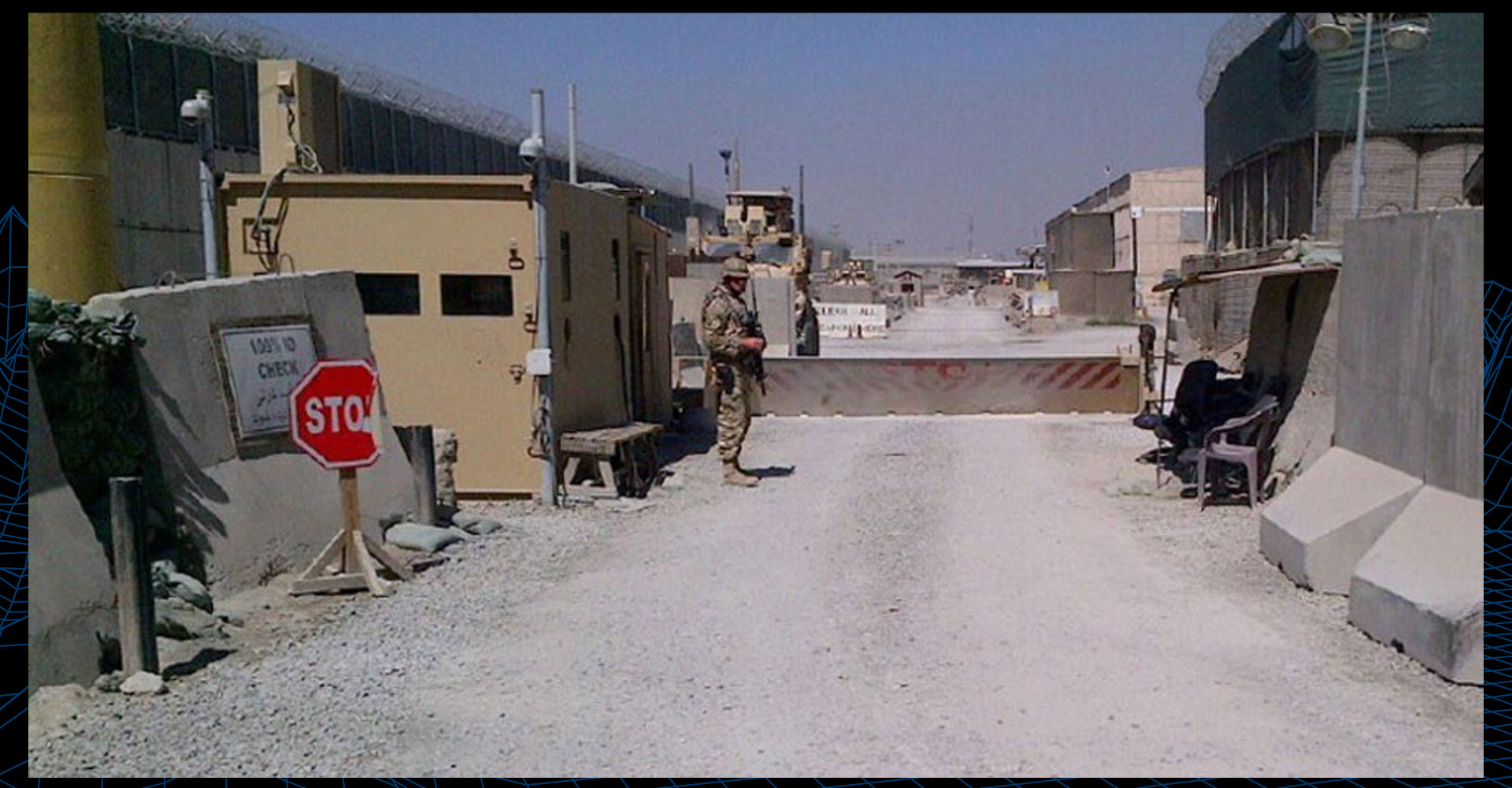
Expendable-Unattended Ground Sensor (EUGS)
MISSION:
The Expendable-Unattended Ground Sensor (EUGS) is a quick reaction capability that provides Soldiers with a covert, autonomous surveillance tool for seismically detecting enemy vehicles and footstep traffic in near real time. Sensors are deployed in tactical, reconnaissance and border security operations to provide early warning and intelligence while minimizing the need for direct human monitoring or surveillance.
DESCRIPTION:
EUGS is a near real-time autonomous surveillance tool that is simple to deploy, operate, and transport, with the capability to seismically detect and report human footsteps or moving vehicles. The system consists of a Base Station Kit and Sensor Kit containing 55 expendable sensors.
SYSTEM INTERDEPENDENCIES:
- EUGS (Slew-to-Cue) STC capability is integrated into aerostats and BETSS-C
PROGRAM STATUS:
- EUGS is currently in operations and sustainment.
PROJECTED ACTIVITIES:
- GBOSS-E Integration, participation in NEXT GEN C2 exercises Ivy Mass & PCC-6
Expendable-Unattended Ground Sensor (EUGS)
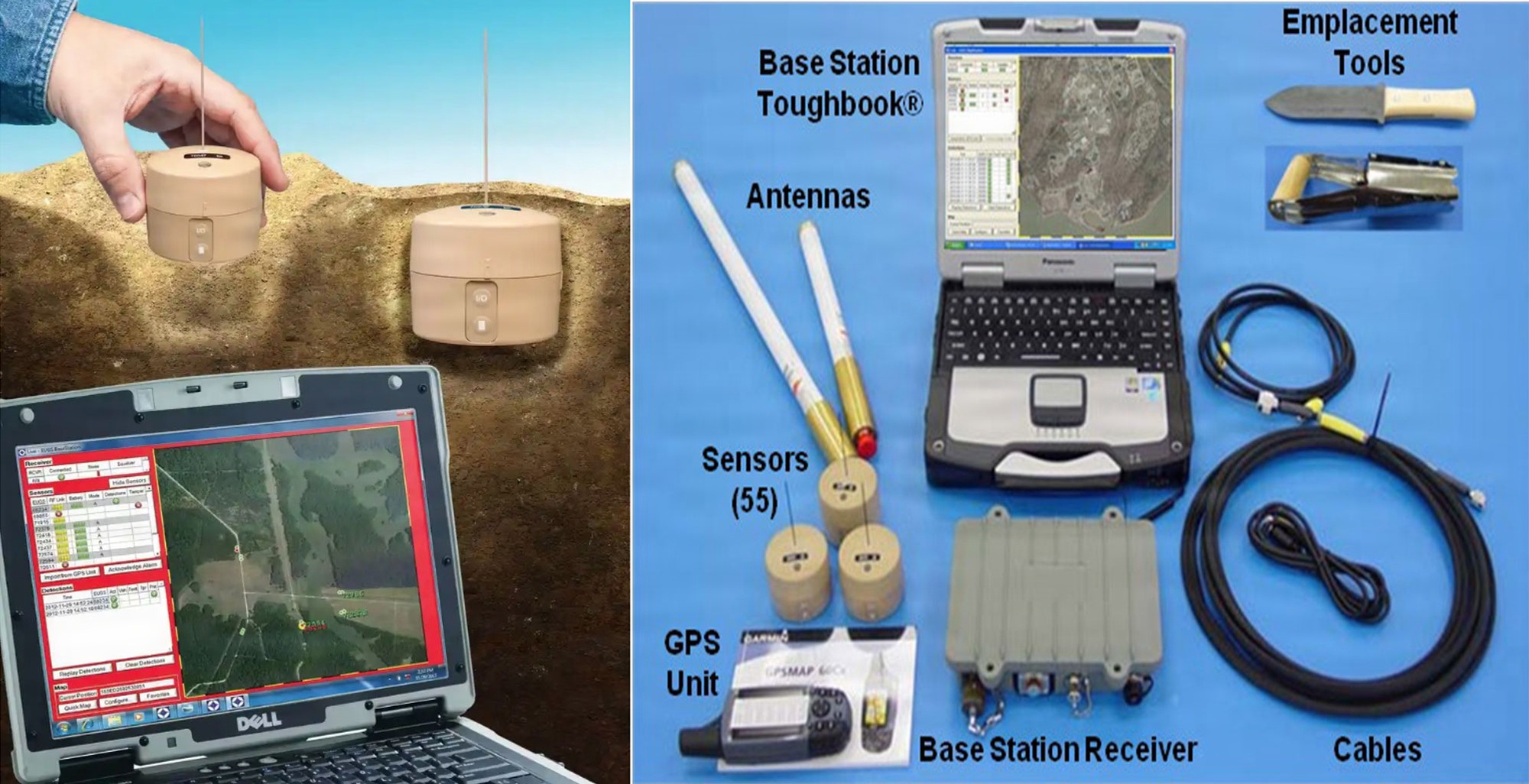
Ground-Based Operational Surveillance System (Expeditionary) (G-BOSS(E))
MISSION:
G-BOSS(E) is an expeditionary, ground-based, self-contained, multi-spectral sensor, persistent surveillance system used to observe, collect, detect, classify, identify, track, record, and report on contacts, objects of interest, and assessed threats twenty-four hours a day utilizing a fused video and sensor data display. The expeditionary nature is a critical aspect of the G-BOSS(E) to meet joint operations.
DESCRIPTION:
G-BOSS(E) is an expeditionary, ground/tower-based, self-contained, multi-spectral sensor system providing persistent surveillance and threat detection capabilities, enhancing situational awareness and rapid decision-making.
The size and weight of G-BOSS(E) allow mobility, transportability, scalability, and modularity consistent with deployment and employment using common U.S. air, land, and sea transport assets. G-BOSS(E) is easily operated and maintained, and it is rugged enough to support expeditionary operations worldwide and compliments Transformation in Contact (TIC) and Large-Scale Combat Operation (LSCO) initiatives.
SYSTEM INTERDEPENDENCIES:
- N/A
PROGRAM STATUS:
- Production and Deployment (P&D)
PROJECTED ACTIVITIES:
- G-BOSS(E) Medium systems are slated for fielding to 50 COMPO 1, 2, and 3 Military Police Headquarters Battalions and one Army Prepositioned Stock including comprehensive New Equipment Training
- Due to operational need requirements to support the Southern Border mission, G-BOSS(E) Medium systems are being fielded to units deployed to the Southern Border to support Customs and Border Protection’s security mission
Ground-Based Operational Surveillance System (Expeditionary) (G-BOSS(E))
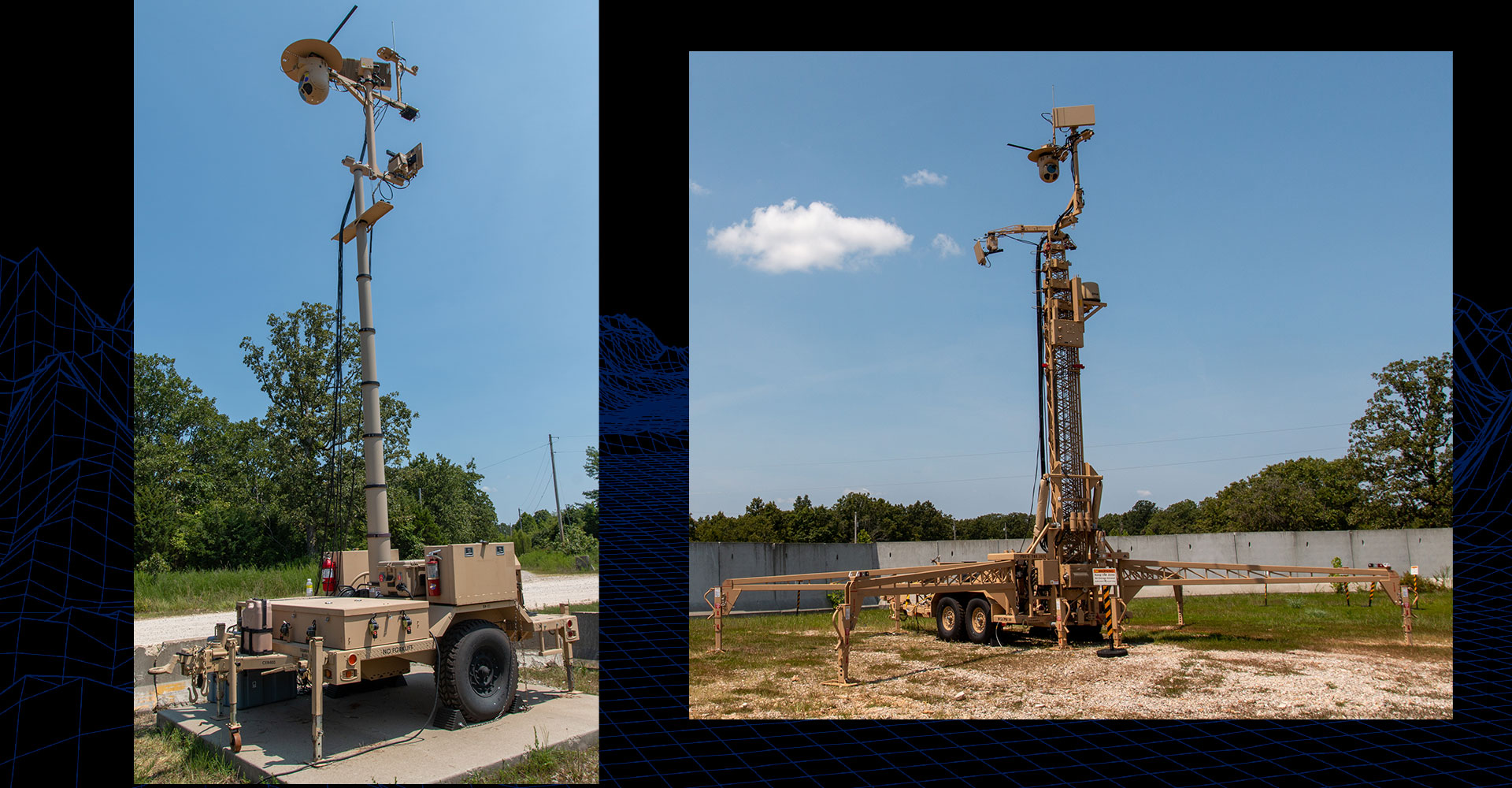
Gunshot Detection System (GDS)
MISSION:
The Gunshot Detection System (GDS) provides a detection capability to rapidly locate the origin of hostile gunfire and provides an accurate shooter location during degraded environmental conditions, enabling target engagement in all battlefield settings.
DESCRIPTION:
The Boomerang III (BGIII) and the Fixed Site Sniper Detection System (FSSDS) Quick Reaction Capabilities (QRCs) comprise the GDS. BGIII is a vehicle mounted acoustic gunshot detection capability which provides relative azimuth, range and elevation of enemy small arms fire. It detects any bullet .20 caliber to .50 caliber that is supersonic at the time it passes through a 50m detection zone at the halt which decreases to estimated 30m on the move. Once detection is made the system provides an audio and visual report.
FSSDS provides Combat Outposts (COPs) and Forward Operating Bases (FOBs) a networked acoustic gunshot detection capability enabling exact location of enemy gunfire. The system consists of the BGIII equipped with a dual GPS, Situation Awareness System (SAS) mapping capability, and an ethernet based communications network (monitoring station).
SYSTEM INTERDEPENDENCIES:
-
FSSDS integrates with Base Expeditionary Targeting Surveillance Systems – Combined (BETSS-C), Ground-Based Operational Surveillance System – Expeditionary (G-BOSS(E)) towers and provides audio and visual reports including azimuth, range, and elevation to shooters’ locations which populates on the systems Common Operating Picture.
PROGRAM STATUS:
- Operations and Sustainment
PROJECTED ACTIVITIES:
- Continue training and sustainment activities supporting theater operations & fieldings.
Husky Mounted Detection System (HMDS)
MISSION:
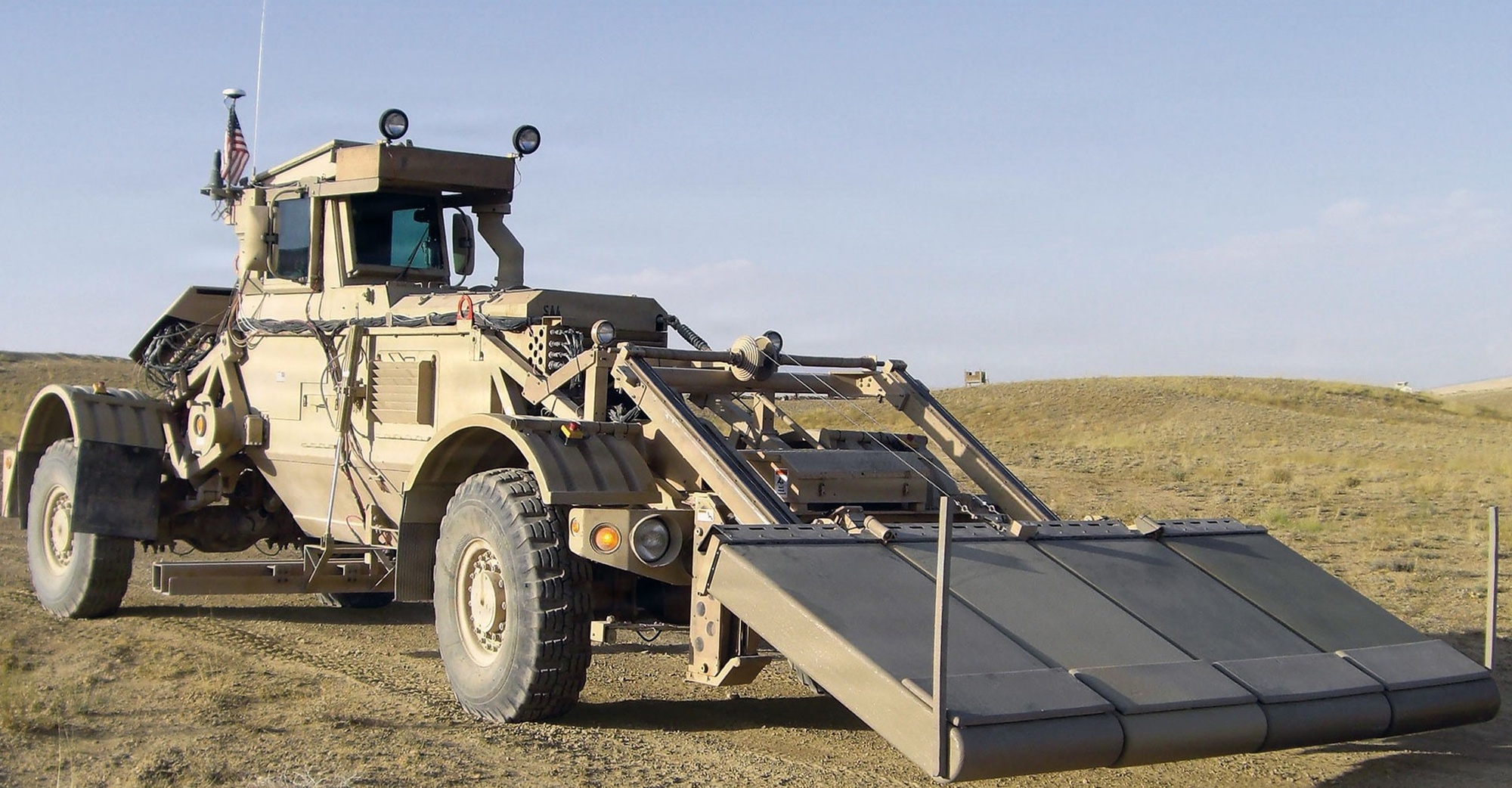
The Husky Mounted Detection System (HMDS) provides Engineer Units with a route clearance capability for detection, interrogation, marking, mobility, and force protection against worldwide explosive hazards.
DESCRIPTION:
The HMDS is a counter explosive hazard system that provides standoff detection and marking of metallic and low-metallic shallow-buried antitank landmines, trigger mechanisms, improvised explosive devices (IEDs), and in support of route clearance operations. Initially fielded as a Quick Reaction Capability (QRC), it is still deployed in theater.
The HMDS with Wire Detection (WD) configuration, referred to as the AN/VSS-6B or HMDS-6B, is an enhancement (addition) to the baseline HMDS Ground Penetrating Radar (GPR) configuration (AN/VSS-6A or HMDS-6A). HMDS-6B significantly increases probability of detection of IED components commonly encountered during route clearance operations.
SYSTEM INTERDEPENDENCIES:
- N/A
PROGRAM STATUS:
- Operations and Sustainment
PROJECTED ACTIVITIES:
- Continue collaboration with HQDA DCS G-3/5/7/8 & OCE for POM 29-33 cost estimate development to convert 17 HMDS-6A systems to HMDS-6B systems supporting the Engineer Force Design Update 2030 transformation.
-
Continue collaboration with CECOM ILSC for HMDS-6B transition to sustainment activities.
Husky Mounted Detection System (HMDS)
Integrated Base Defense-Kitting (IBD-K)
MISSION:
IBD-K provides an integrated Force Protection System of Systems that enhance a Unit’s protective posture and situational awareness by providing tailorable (a la carte) and layered sensor coverage. IBD-K provides Commanders with near-real-time threat detection assisting in facilitating coordinated, rapid responses to detected threats.
DESCRIPTION:
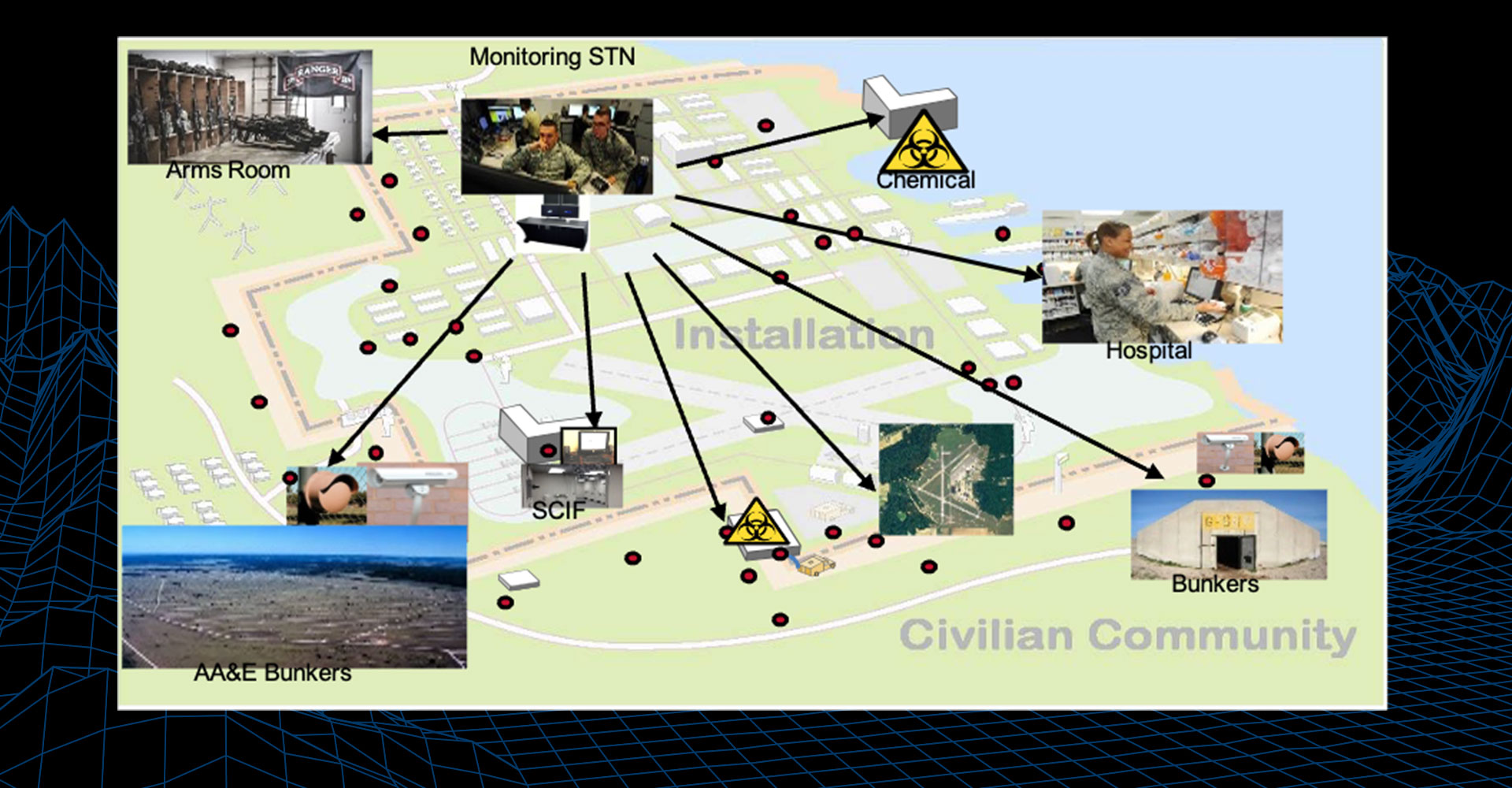
IBD-K is an integrated, tailorable Force Protection System of Systems (SoS) providing Perimeter Security, Entry Control, Persistence Surveillance, Command and Control (C2), and Warning and Alert capabilities at Forward Operating Bases (FOB) and installations.
As a System of Systems, IBD-K provides an integrated force protection capability comprised of the following equipment:
- Perimeter Security: Closed Circuit Television (CCTV) with infrared (IR) capability, Pan-Tilt-Zoom (PTZ) cameras with IR capability, Long Range Thermal Imagers (LRTI), Battlefield Anti-Intrusion System (BAIS)
- Entry Control: Portable Barriers, Ballistic Booths, Cameras, Non-Intrusive Inspection Systems, Turnstiles, 2-Way Audio
- Persistent Surveillance: BETSS-C
- C2 Data Fusion: Joint All-Hazards Common Control System (JACCS)
- Warn and Alert: Long Range Acoustic Device (LRAD), Joint Chemical Agent Detector (JCAD)
SYSTEM INTERDEPENDENCIES:
- N/A
PROGRAM STATUS:
- Operations and Sustainment
PROJECTED ACTIVITIES:
- Continued system sustainment and support for emerging requirements
Integrated Base Defense-Kitting (IBD-K)

Integrated Commercial Intrusion Detection System (ICIDS)
MISSION:
ICIDS provides a standard intrusion detection capability for DoW facilities world-wide including conventional, nuclear, and chemical sites.
DESCRIPTION:
ICIDS is a highly secure, standardized Intrusion Detection System using state-of-commercial technology to detect and assess unauthorized intrusion of protected areas. ICIDS provides real-time assessment and rapid flexible response to existing, imminent, or emerging threats. ICIDS is based on a scalable architecture designed to accommodate a set quantity of protected zones within the installation.
SYSTEM INTERDEPENDENCIES:
- N/A
PROGRAM STATUS:
- Production and Deployment (P&D)
PROJECTED ACTIVITIES:
- ICIDS is scheduled to field to 15 Installations to include U.S. Army Garrisons within INDO-PACOM and EUCOM in FY26-27.
Integrated Commercial Intrusion Detection System (ICIDS)
Non-Intrusive Inspection Systems (NIIS)
MISSION:
To enhance Force Protection against Vehicle and Personnel Improvised Explosive Devices, weapons, hidden personnel, narcotics, and other contraband in response to multiple Joint Urgent Operational Needs (JUONs) and Operational Needs Statement (ONS).
DESCRIPTION:
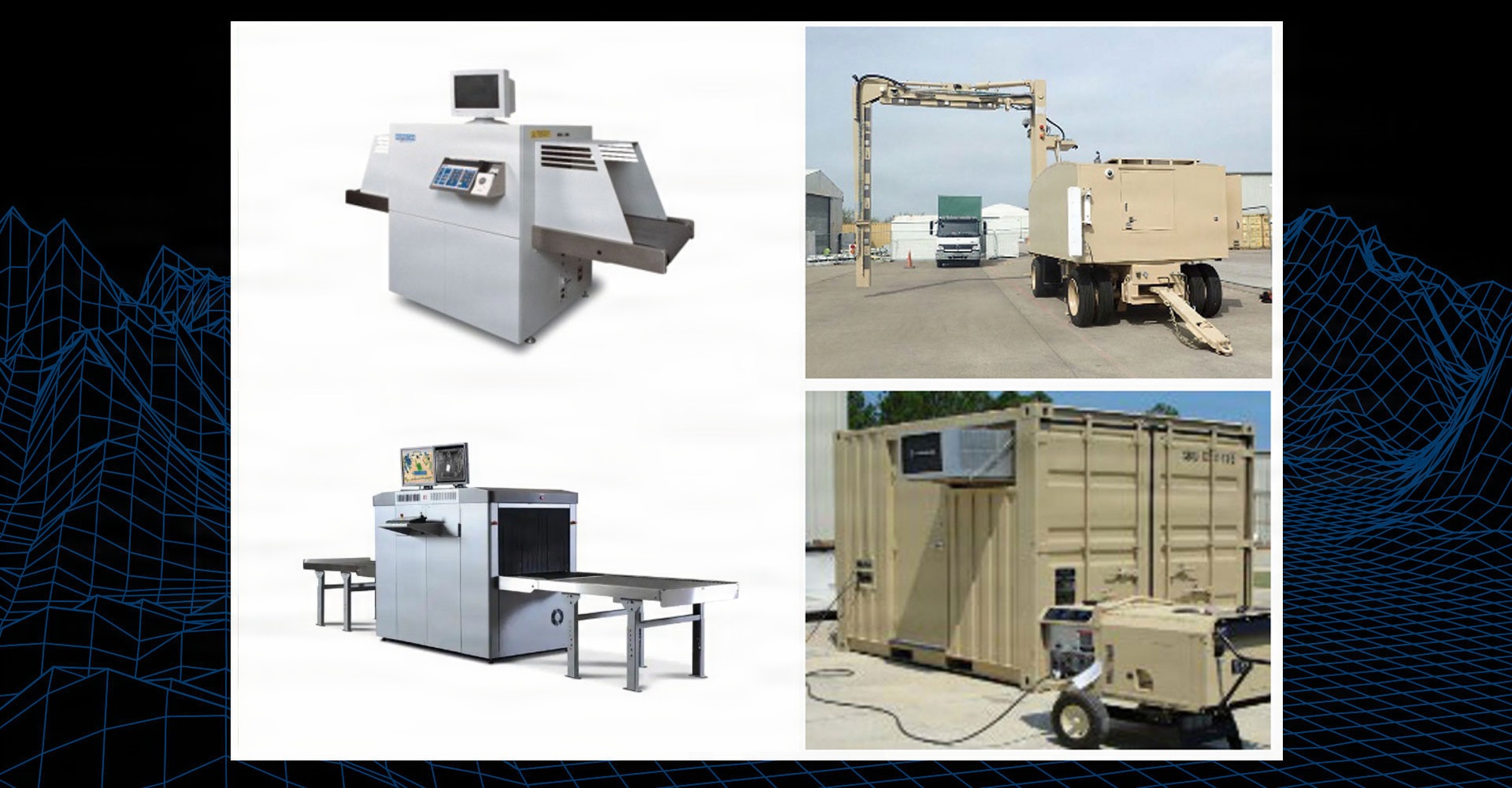
NIIS is a Commercial off-the-Shelf (COTS)-based family of detection and screening systems used for non-intrusive inspection and scanning of vehicles, containers, personnel, and baggage. NIIS provides increased probability of detection of anomalies indicating the presence of explosives, weapons, personnel, or other contraband.
NIIS uses X-ray and Backscatter technologies to identify and alert operators to scanned anomalies at Entry Control Points (ECP).
The NIIS Family of Systems include:
- Eagle T25 Trailer-Mounted, Drive-Through Inspection System: Self-contained and rapidly deployed vehicle and cargo container X-ray inspection system. Systems can be operated from up to 300 meters standoff for added personnel safety. Throughput of up to 60 trucks per hour
- Baggage Inspection Systems: Self-contained X-ray baggage and parcel inspection systems
- Personnel Scanner: Enables operators to easily identify concealed threats. The Backscatter technology provides high resolution images of both organic (e.g., explosives, narcotics, ceramic weapons) and inorganic (e.g., metal) items
SYSTEM INTERDEPENDENCIES:
- N/A
PROGRAM STATUS:
- Operations and Sustainment
PROJECTED ACTIVITIES:
- Continued system sustainment and support for emerging requirements
Rapid Deployment Integrated Surveillance System (RDISS)
MISSION:
RDISS provides an easy to install, operate, and maintain, rapidly relocatable base defense camera system for increased detection, assessment, and persistent surveillance.
DESCRIPTION:
RDISS is an easily transportable, flexible, scalable, expeditionary video surveillance system (Closed Circuit and Pan-Tilt-Zoom) providing outside the perimeter detection and assessment capabilities for Joint Security Sites, Combat Outposts, and Forward Operating Bases.
SYSTEM INTERDEPENDENCIES:
- N/A
PROGRAM STATUS:
- Sustainment
PROJECTED ACTIVITIES:
- Continued system sustainment and support for emerging requirements
Rapid Deployment Integrated Surveillance System (RDISS)

Vehicle Optics Sensor System (VOSS)
MISSION:
The Vehicle Optics Sensor System (VOSS) provides Army Combat Engineers and Explosive Ordnance Disposal (EOD) Units with a route clearance capability for standoff detection, identification, and/or interrogation of suspected explosive hazards to include improvised explosive devices (IEDs).
DESCRIPTION:
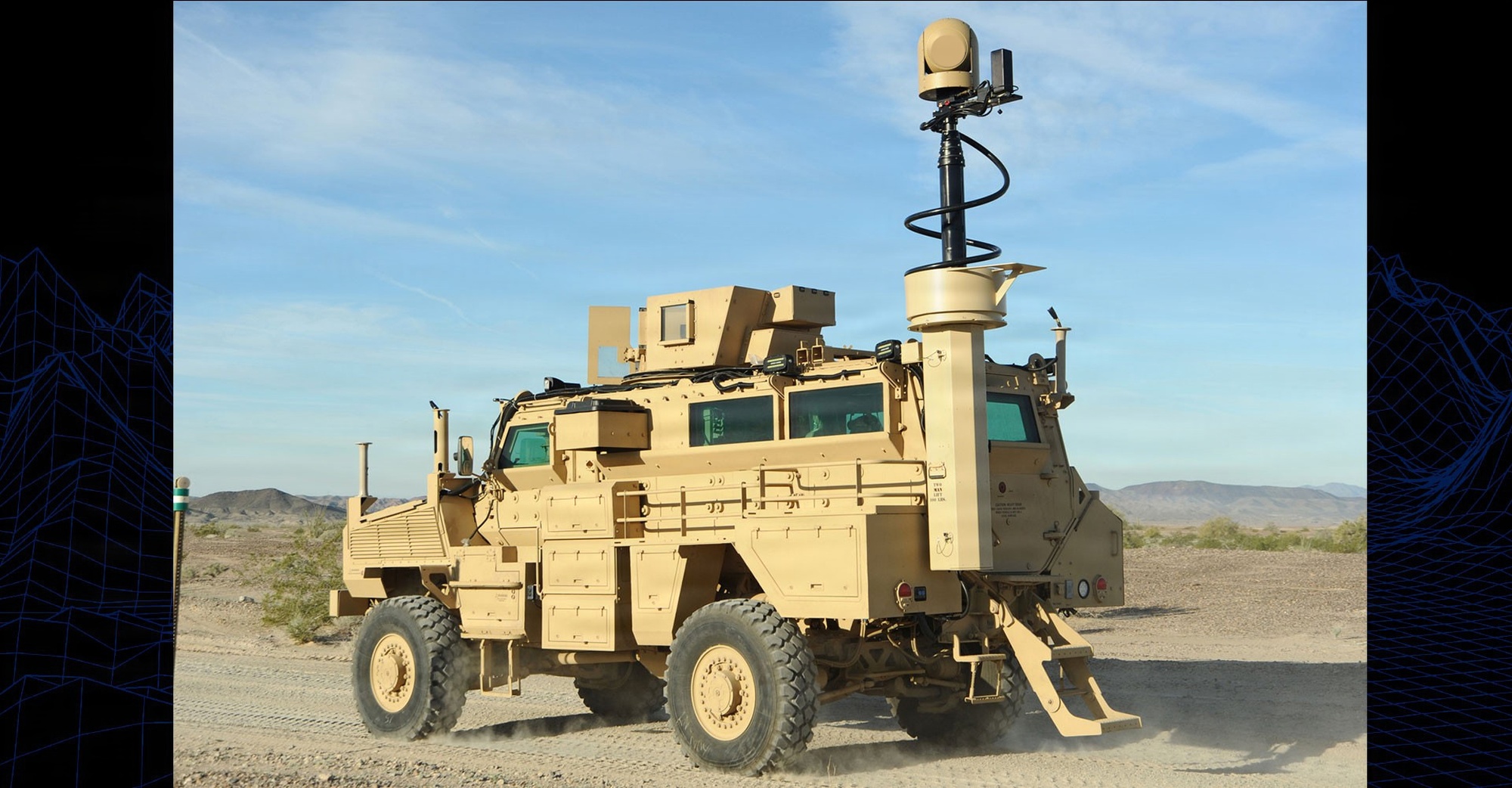
The VOSS is a vehicle-mounted, telescopic optical device with a mast that can be raised and lowered to enable Soldiers inside MMPV Type I (Panther & recapitalized RG33L+) and Type II (recapitalized RG-31) vehicles to visually locate suspected explosive hazards, explosive hazards indicators, and explosive hazard activities far forward of the formation.
SYSTEM INTERDEPENDENCIES:
- VOSS is integrated onto the Medium Mine Protective Vehicle (MMPV) Type I (Panther & recapitalized RG33L+) and MMPV Type II (recapitalized RG-31) vehicles and uses the Selective Availability Anti-Spoofing Module (SAASM) for target location.
PROGRAM STATUS:
- Operations and Sustainment
PROJECTED ACTIVITIES:
- Continue collaboration with HQDA DCS G-3/5/7/8 & OCE for POM 29-33 cost estimate development to convert 142 AN/VSQ-6B to AN/VSQ-6C systems supporting the Engineer Force Design Update 2030 transformation.
Vehicle Optics Sensor System (VOSS)