




MISSION:
To develop, field, and sustain integrated Electromagnetic Warfare (EW), Signals Intelligence (SIGINT), and Space capabilities for the Army, Joint Services, Allies, and international partners.
VISION:
An Army equipped for electromagnetic spectrum dominance in competition, crisis, and conflict.
COL SCOTT SHAFFER

As a native Texan, Colonel Scott Shaffer holds a Bachelor of Science in Electrical Engineering from Texas A&M University and a Master of Science in Systems Engineering from Southern Methodist University.
COL Shaffer graduated from Senior Service College at the College of Information and Cyberspace (NDU) in June 2025. He previously served as the Executive Officer to the Principal Military Deputy to the Assistant Secretary of the Army (Acquisition, Logistics and Technology) (ASA(ALT)). From April 2020 to March 2023, COL Shaffer led Product Manager Mission Command Cyber under the Program Executive Office for Command, Control and Communications – Tactical (PEO C3T).
Prior to command, he worked for ASA(ALT) as an Executive Officer for the Deputy Assistant Secretary of the Army (Strategy and Acquisition Reform) and as the Headquarters, Department of the Army System Coordinator for the Project Manager Tactical Radio, Network Cross Functional Team, and Security Forces Assistance Brigade communications. From August 2016 – May 2018, COL Shaffer served as the Chemical, Biological, Radiological and Nuclear Acquisition & Requirements Officer at the Maneuver Support Center of Excellence. From June 2014 – July 2016, he was an Assistant Product Manager (APM) for PEO C3T, under Product Manager Joint Enterprise Network Manager. From 2011 – 2013, he served as an APM for the PEO Intelligence, Electronic Warfare & Sensors, under Product Manager Information Warfare working highly classified programs. In 2009, he held his first acquisition assignment as a Military Technology Transition Lead at the U.S. Army Research Laboratory.
Prior to acquisition, COL Shaffer was assigned to 2nd Squadron, 3rd Armored Cavalry Regiment where he served as the Squadron S6, Battle Captain, and Electronic Warfare Officer. He deployed with 2nd Squadron during Operation Iraqi Freedom (OIF). In 2004, he was assigned to the 51st Signal Battalion, 35th Signal Brigade (Airborne) where he served as the Headquarters Company Executive Officer, Battalion S3 Training Officer, and the acting Headquarters Company Commander. He deployed with 51st Signal Battalion during OIF III. COL Shaffer was commissioned as an Air Defense Artillery (ADA) officer in 2002 and first served as an Avenger Platoon Leader with Delta Battery, 5th Battalion, 5th ADA at Camp Casey, Korea.
COL Shaffer is a graduate of the Command and General Staff College; the Army Acquisition Basic and Intermediate Contracting Courses; the Army Acquisition Intermediate Qualification Course; the Signal Officer/S6 Advance Course; and the Air Defense Officer Basic Course. He is DAWIA Level III certified in both Program Management and Engineering as well as Lean Six Sigma, Black Belt Certified.
His awards and decorations include the Bronze Star Medal, Defense Meritorious Medal, Meritorious Service Medal (5 OLC), Army Commendation Medal (3 OLC), Army Achievement Medal, Valorous Unit Award, Meritorious Unit Commendation, National Defense Service Medal, Iraq Campaign Medal (2 Stars), Global War on Terrorism Expeditionary Medal, Global War on Terrorism Service Medal, Korean Defense Service Medal, Army Service Ribbon, Overseas Service Ribbon (2 OLC), Army Staff Identification Badge, and Army Parachutist Badge.
COL Shaffer is married and has two sons.
 |
|
MR. MARK SAXON

Mr. Mark Saxon currently serves as the Deputy Project Manager, Electronic Warfare & Cyber (EW&C). Prior to this assignment, he was the Deputy Product Manager (PdM) for Positioning, Navigation and Timing (PNT) Modernization. As the Deputy PdM, he provided direction and leadership for the execution of the PNT Modernization strategy: accelerating the transition of incremental & disruptive PNT capabilities from Industry, Academia and Government by leveraging the PNT Reference Architecture and Modular Open System Architectures (MOSA) to provide the Warfighter with overmatch of evolving PNT threats.
From March 2019 – February 2022, Mr. Saxon served as the Director of Test and Evaluation for PM PNT. In this role, he was responsible for the program test strategy, coordination with Army Test and Evaluation Command (ATEC), and coordination with Director, Operational Test and Evaluation (DOT&E). He successfully supervised testing of the Mounted Assured PNT System (MAPS) and the Dismounted Assured PNT System (DAPS) at multiple Developmental and Operational open air test events. The program received positive Capabilities and Limitations reports to support Quick Reaction Capabilities and a positive Milestone Assessment Report to support MAPS Milestone C.
From 2015 until 2019, he served as a Lead Engineer for the Office of the Chief Systems Engineer (OCSE) and the Rapid Capabilities and Critical Technologies Office (RCCTO). During that time, Mr. Saxon designed and developed vehicle architectures and interconnectivity diagrams to support Capability Set fieldings. He was also the project lead for the RCCTO Assured PNT program that led to the fielding of MAPS GEN I.
Mr. Saxon previously supported PEO Command, Control, and Communications, Tactical (C3T) as a Senior Systems Engineer for Tactical Mission Command and Common Hardware Systems. Before his Army Civilian career, he spent eleven years with Battelle developing Chemical and Biological protection systems for Defense Advanced Research Projects Agency (DARPA) and the Defense Threat Reduction Agency (DTRA).
Mr. Saxon holds a Master of Science in Systems Engineering from Johns Hopkins University and a Bachelor of Science in Chemical Engineering from the Georgia Institute of Technology. He earned the Practitioner Certification in Program Management and the Level III certification in System Planning, Research, Development, and Engineering (SPRDE).
He and his wife have two sons, and they enjoy many outdoor activities as a family.
|
 |
LATEST PM EW&C NEWS
RESOURCES
PM EW&C OVERVIEW VIDEO | DVIDS
PM EW&C Strategic planning guide

ELECTRONIC ATTACK (EA)
ELECTRONIC WARFARE INTEGRATION (EWI)

Strategic Spectrum Warfare (SSW)
Tactical Spectrum Warfare (TSW)
Programs
Electronic Attack (EA)
Counter RCIED Electronic Warfare (CREW) / Duke
MISSION:
Provides Soldiers with a force protection system for current and future combat vehicles as well as fixed site systems by establishing spectrum dominance for defeating RF-initiated ground IEDs and UAS attacks. Enables commanders to rapidly configure defensive posture against evolving threats and leverage best of breed technologies.
DESCRIPTION:
Designed to protect mounted and dismounted forces and fixed site locations by defeating threats that operate in the EMS including fuzed munitions, Radio Controlled Improvised Explosive Devices (RCIEDs) and Unmanned Aerial Systems (UAS).
SYSTEM INTERDEPENDENCIES:
- Tactical vehicles
- Non-tactical vehicles
PROGRAM STATUS:
- FY25: Sustainment
PROJECTED ACTIVITIES:
- FY26: Repurposed legacy technologies to support C-UAS
Counter RCIED Electronic Warfare (CREW) / Duke

Long Range Aerial Electromagnetic Warfare (LRAEW)
MISSION/DESCRIPTION:
LRAEW is a Quick Reaction Capability (QRC) that provides Brigade Combat Team (BCT) commanders with an organic airborne offensive EW capability. It is a platform agnostic airborne EW payload that can be mounted on various fixed winged and rotary aircraft.
SYSTEM INTERDEPENDENCIES:
- Fixed winged and rotary aircraft
- Tactical Network
PROGRAM STATUS:
- FY25: Initiated Urgent Capability Acquisition Pathway
PROJECTED ACTIVITIES:
- FY26: Systems Integration and Test
Modi Dismounted EW System
MISSION / DESCRIPTION:
Modi is a dismounted manpack programmable Quick Reaction Capability (QRC) system that provides full spectrum coverage allowing the Warfighter the ability to maneuver with increased protection against Radio-Controlled Improvised Explosive Devices (R-CIEDs). It is designed to counter an array of diverse threats through state-of-the-art capabilities.
SYSTEM INTERDEPENDENCIES:
- N/A
PROGRAM STATUS:
- Operations and Sustainment
PROJECTED ACTIVITIES:
- None, in sustainment
Modi Dismounted EW System
Modular Electromagnetic Spectrum System (MEMSS)
MISSION:
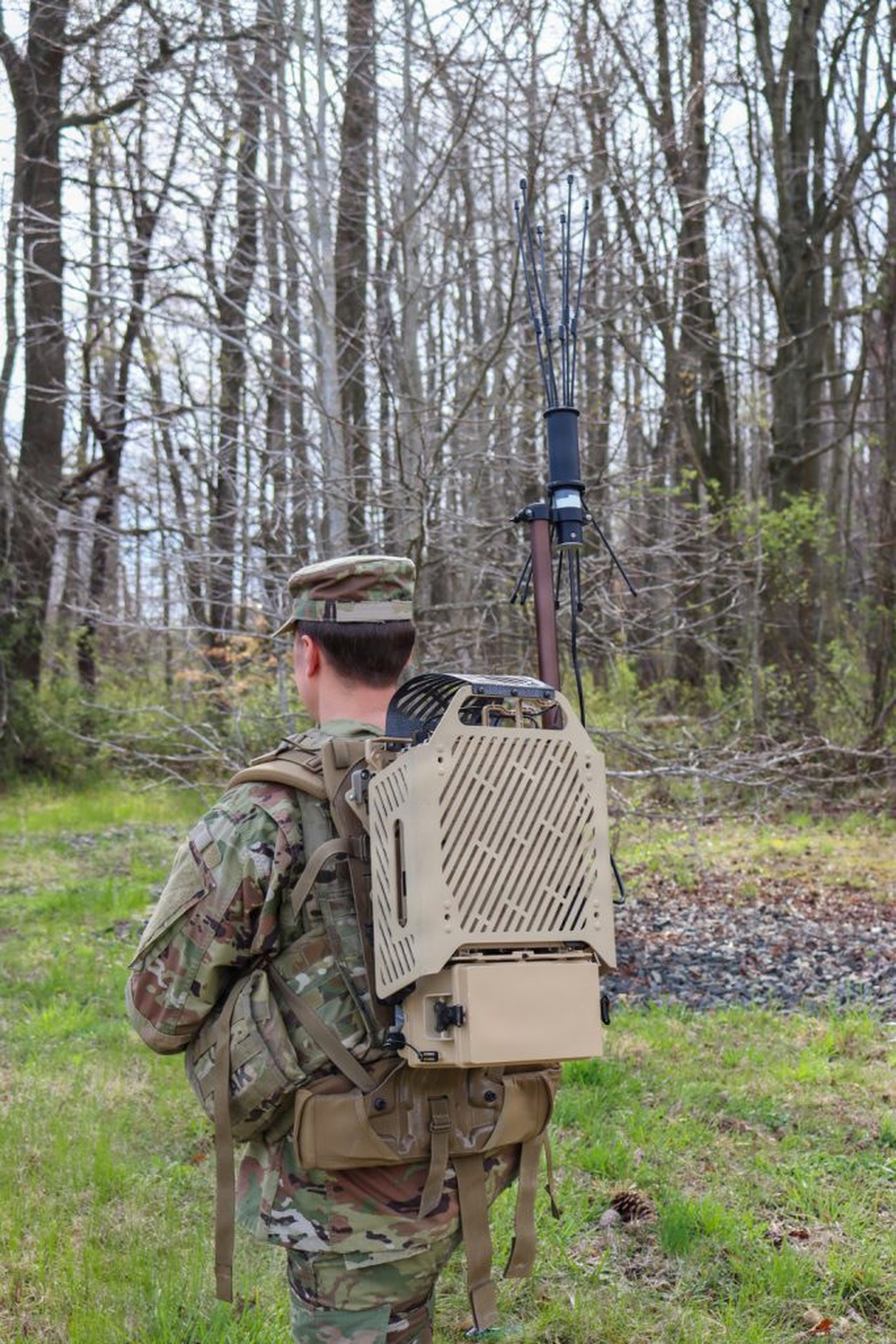
MEMSS fulfills critical requirement gaps for Command Post Survivability, Radio Frequency (RF) Signature Management, and Large-Scale Combat Operations through degradation of adversary decision making and their targeting cycle of our Soldiers, platforms, and mission command nodes.
DESCRIPTION:
MEMSS is an electromagnetic warfare (EW) capability providing force protection and freedom of maneuver through RF technical effects.
SYSTEM INTERDEPENDENCIES:
- Electronic Warfare Planning and Management Tool (EWPMT)
- Spectrum Situational Awareness System (S2AS)
- Assured Positioning, Navigation and Timing (A-PNT)
- Tactical Networks
- Tactical Radio Communications
PROJECTED ACTIVITIES:
- FY26: Acquisition New Start
- FY26: MTA Rapid Prototype Initiation
Modular Electromagnetic Spectrum System (MEMSS)

Electronic Warfare Integration (EWI)
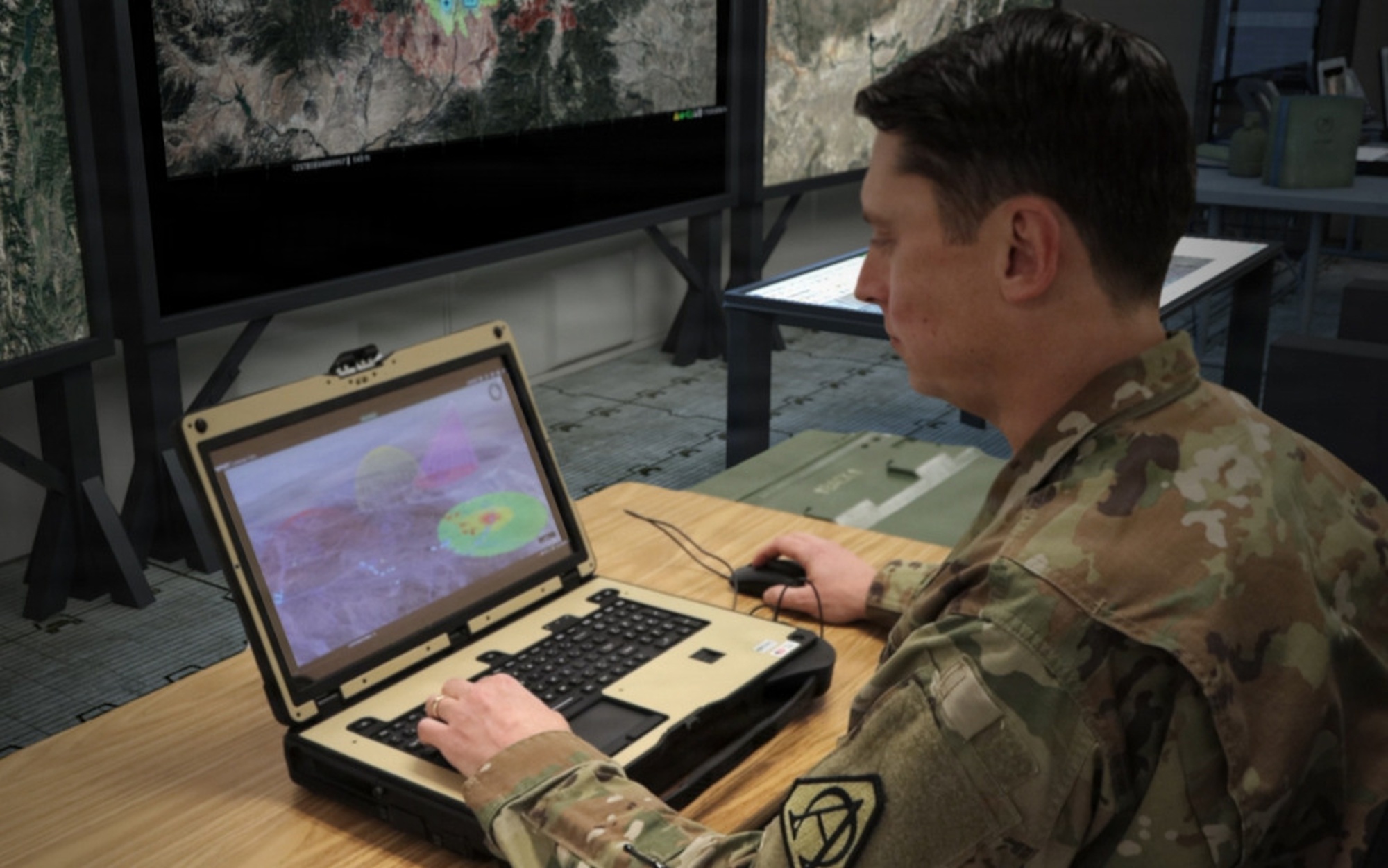
Electronic Warfare Planning and Management Tool (EWPMT)
MISSION:
EWPMT is the electromagnetic warfare application to visualize, control, manage, and dominate the EMS in support of Electromagnetic Spectrum Operations (EMSO). It provides the ability to plan, model, and manage EW spectrum assets to provide non-kinetic effects against threat emissions and provide targeting support across Fires and Intelligence, which enable kinetic effects against threat targets.
DESCRIPTION:
EWPMT equips the Force with the tools necessary to provide EMS Awareness and enabled freedom of maneuver across Multi-Domain Operations. Integration with the Army’s Next Generation Command and Control (NGC2) is providing expanded EMS awareness, C2, and understanding across warfighting functions to shorten the targeting kill chain.
SYSTEM INTERDEPENDENCIES:
- Assured Positioning, Navigation, and Timing (A-PNT)
- Next Generation Command and Control (NGC2)
PROGRAM STATUS:
- FY21: Successfully completed IOT&E
- FY23: Full Deployment Decision (FDD)
- FY23+: Continued Fielding and SW releases
PROJECTED ACTIVITIES:
- FY26+: Integration into NGC2
Electronic Warfare Planning and Management Tool (EWPMT)
Strategic Spectrum Warfare (SSW)
Terrestrial Layer System – Echelons Above Brigade (TLS EAB)
MISSION:
TLS EAB provides indications and warnings to influence the commander’s decision cycle, improves targeting quality, timeliness and accuracy, and provides electronic attack and offensive cyber warfare options to detect, deny, degrade, disrupt or otherwise manipulate the targeted force.
DESCRIPTION:
TLS EAB is a family of systems composed of multiple variants which provide integrated, distributed Signals Intelligence (SIGINT) and Electromagnetic Warfare (EW) capabilities to Army Divisions, Corps and Multi-Domain Task Forces.
SYSTEM INTERDEPENDENCIES:
- Next Generation Command and Control (NGC2)
- Assured Positioning Navigation and Timing (A-PNT)
- Tactical Vehicles
- Tactical Electric Power
PROGRAM STATUS:
- FY22: Initiation of MTA Rapid Prototyping
- FY22: Competitive Prototype Design with OTA Awards
- FY23: Prototype Design Reviews & Soldier Touch Points (STPs)
- FY24: System Design Review (SDR)
- FY25: Prototype build and demonstrations
PROJECTED ACTIVITIES:
- FY26: Developmental Testing
- FY27: Operational Demonstration
- FY27: Transition to Middle Tier Acquisition Rapid Fielding
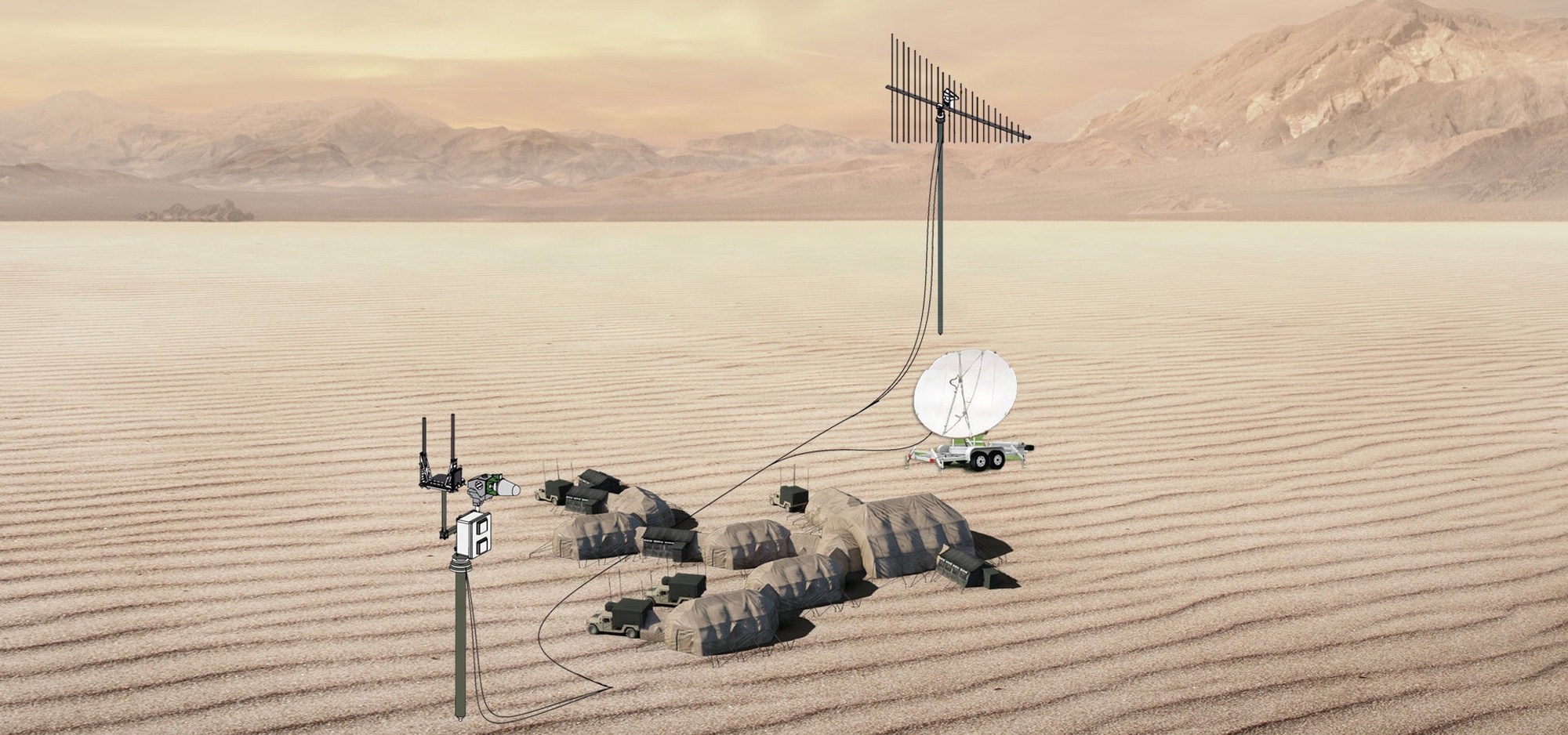
Theater SIGINT System (TSIGS)
MISSION:
TSIGS provides tactical commanders at echelons above corps with a forward deployable, remotely, or locally controlled, SIGINT system for maintaining operational readiness and support for contingency operations.
DESCRIPTION:
TSIGS is a family of systems comprised of persistent, non-persistent and survey signals SIGINT systems supported by a novel network transport layer. TSIGS is a passive collection system. When deployed, it can provide tactical survey capabilities and collection intended for persistent and non-persistent radio spectrum coverage, organic direction finding, and access to multiple communication links.
SYSTEM INTERDEPENDENCIES:
- Assured Positioning, Navigation and Timing (A-PNT)
- Tactical Networks
- Tactical Radio Communications
PROGRAM STATUS:
- FY23: Designated Office of Primary Responsibility (OPR) for Program
- FY24: Acquisition Shaping Panel
- FY25: AROC Approval of the CDD
- FY25: MCA Program Initiation – Post MS C
PROJECTED ACTIVITIES:
- FY26-27: Operations and Sustainment
Theater SIGINT System (TSIGS)
Tactical Spectrum Warfare (TSW)
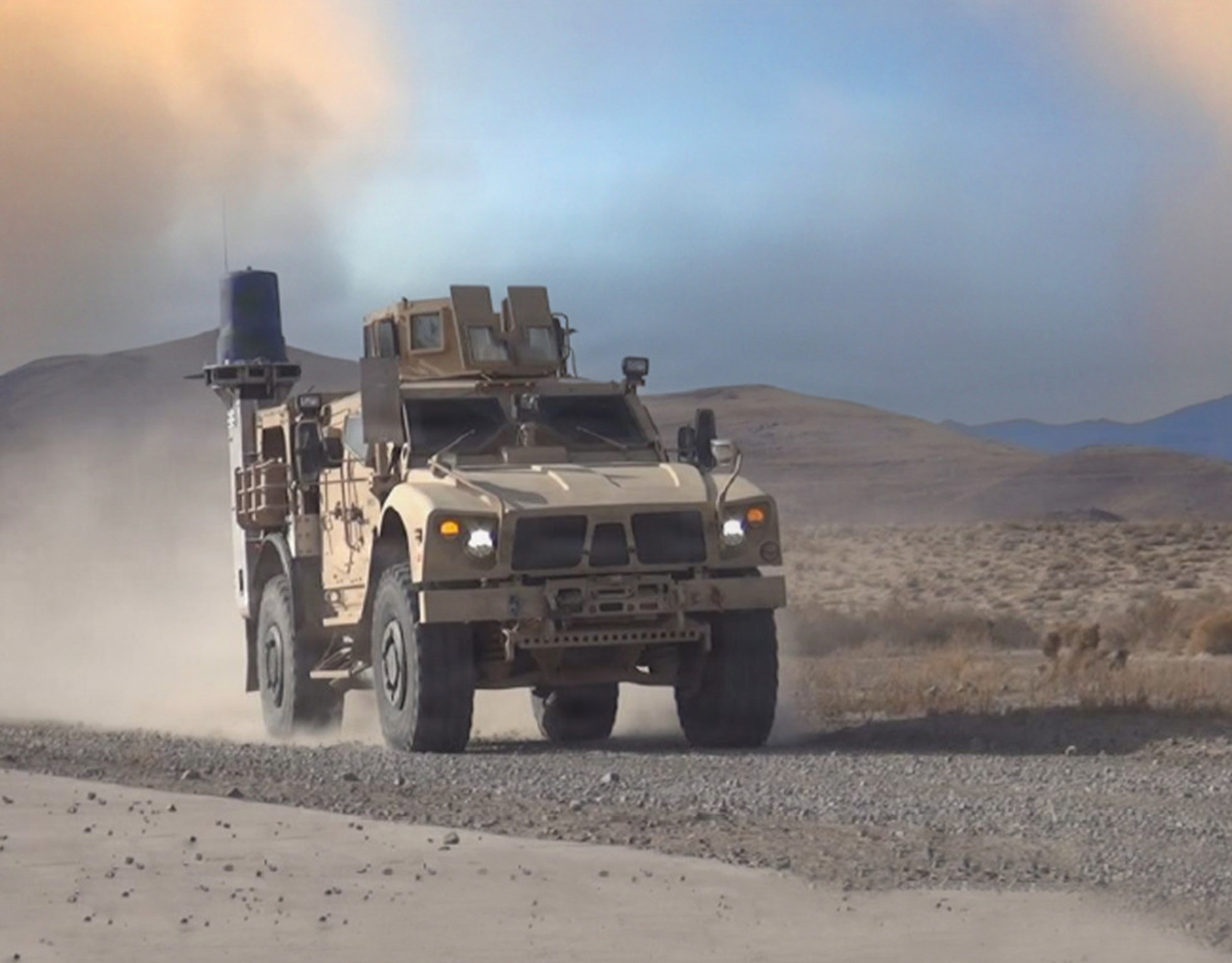
Prophet Enhanced (PE)
MISSION:
The PE system detects, identifies, and targets enemy emitters through multiple configurations supporting manpack, vehicle-mounted, and dismounted / fixed-site operations.
DESCRIPTION:
Prophet Enhanced (PE) is a dedicated, all-weather, 24/7 ground-based tactical SIGINT and ES sensor system, providing force protection, situational awareness, and target development to the U.S. Army. PE is organic to the Military Intelligence (MI) Company (MICO) in the Brigade Combat Team (BCT) and to the Expeditionary – MI Brigade (E-MIB) at Corps.
Enhanced Signals Processing (ESP) upgrades provide:
- Near-peer threat processing
- GPU-based digital signal processing for future SOI upgradability
- Multi-enclave network access
SYSTEM INTERDEPENDENCIES:
- Global Positioning System
- Tactical Radio Communications Systems and Armored Tactical Vehicles
PROGRAM STATUS:
- FY17-21: Modify and Field AN/MLQ-44A to AN/MLQ-44B (POR-A to POR-B) Systems
- FY20-26: Modify and Field AN/MLQ-44B (POR-B) to ESP variant, AN/MLQ-44E (V) 1
- FY22: Sustainment Services Contract with CECOM
- FY23-25: Services and Technology Insertion
PROJECTED ACTIVITIES:
- FY25-26: ESP Fielding
- FY25-35: Hardware Upgrades
- FY25-35: SOI Software Upgrades
- FY26: Services & Technology Insertion
Prophet Enhanced (PE)
Spectrum Situational Awareness System (S2AS)
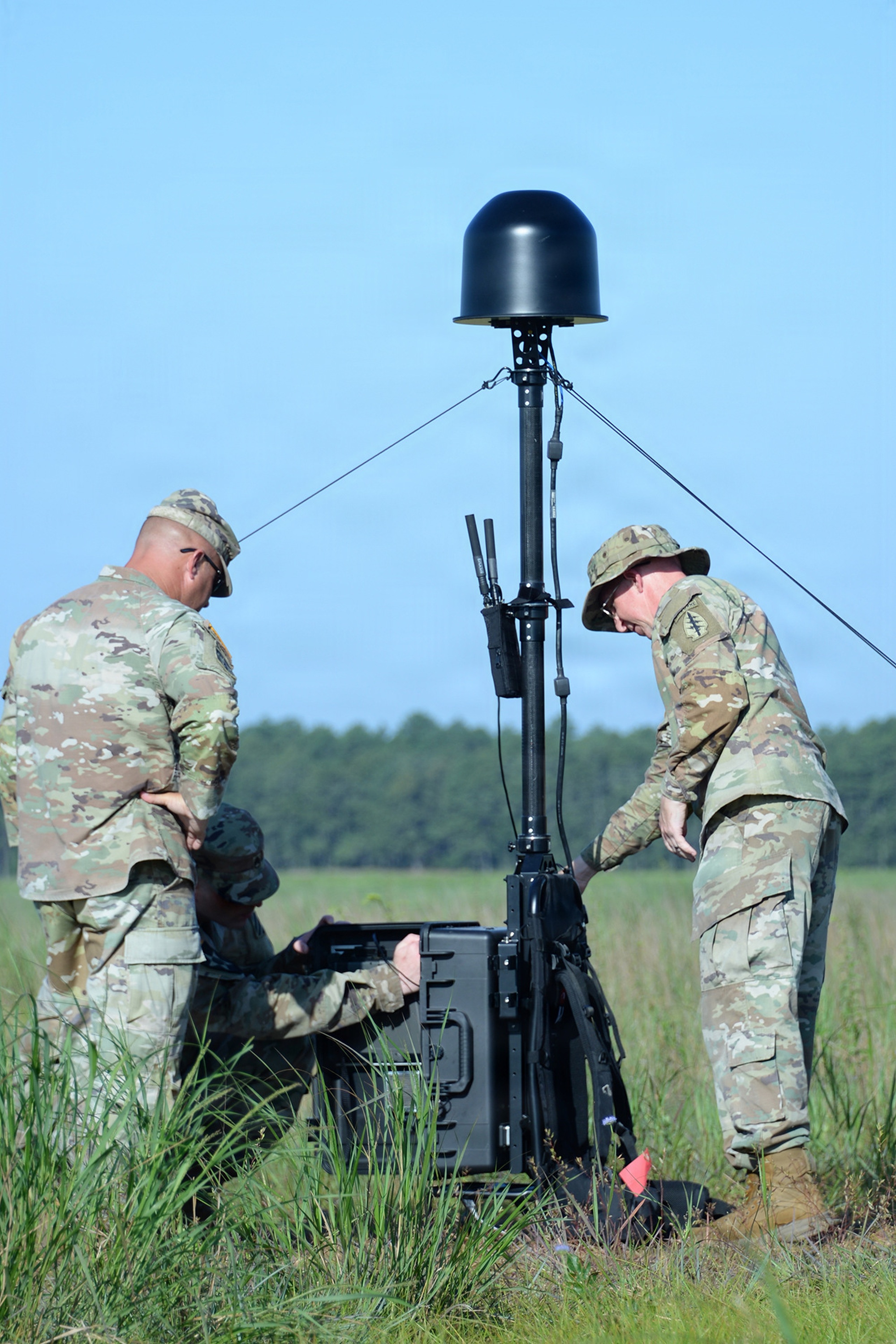
MISSION:
The S2AS senses, detects, and reports in near real time a command post’s electromagnetic spectrum (EMS) signature and sources of electromagnetic interference (EMI) from all sources.
DESCRIPTION:
S2AS is a dedicated EMS situational awareness system that integrates with all versions of EWPMT to provide the Commander with real-time EMS situational awareness to support Emissions Control (EMCON) decisions, EMI resolution, and warn operations centers of unauthorized or intentional sources of interference to enable MDO.
SYSTEM INTERDEPENDENCIES:
- Electronic Warfare Planning and Management Tool (EWPMT)
- Assured Positioning, Navigation and Timing (A-PNT)
- Tactical Networks
- Tactical Radio Communications
PROGRAM STATUS:
- FY23: Designated Office of Primary Responsibility (OPR)
- FY23: AROC Approved A-CDD
- FY24: Technical evaluation
- FY25: Urgent Capability Acquisition
- FY25-26: Transformation in Contact (TiC) Unit Engagements
PROJECTED ACTIVITIES:
- FY26: First Unit Issue
- FY27-32: MTA Rapid Fielding
Spectrum Situational Awareness System (S2AS)
Tactical Electronic Warfare System (TEWS)
MISSION / DESCRIPTION:
TEWS is a Quick Reaction Capability (QRC) that provides an EA and ES capability to Brigade Combat Teams (BCT). Each TEWS consists of an integrated suite of RF antennas and receivers, processors, and EA hardware. TEWS processing includes machine learning signal recognition software as well as integration of Intelligence Community (IC) signal detectors and EA techniques.
SYSTEM INTERDEPENDENCIES:
- Global Positioning System
- Tactical Radio Communications Systems and Armored Tactical Vehicles
PROGRAM STATUS:
- Program Status: Quick Reaction Capability; Sustainment
PROJECTED ACTIVITIES:
- None, in sustainment
Tactical Electronic Warfare System (TEWS)
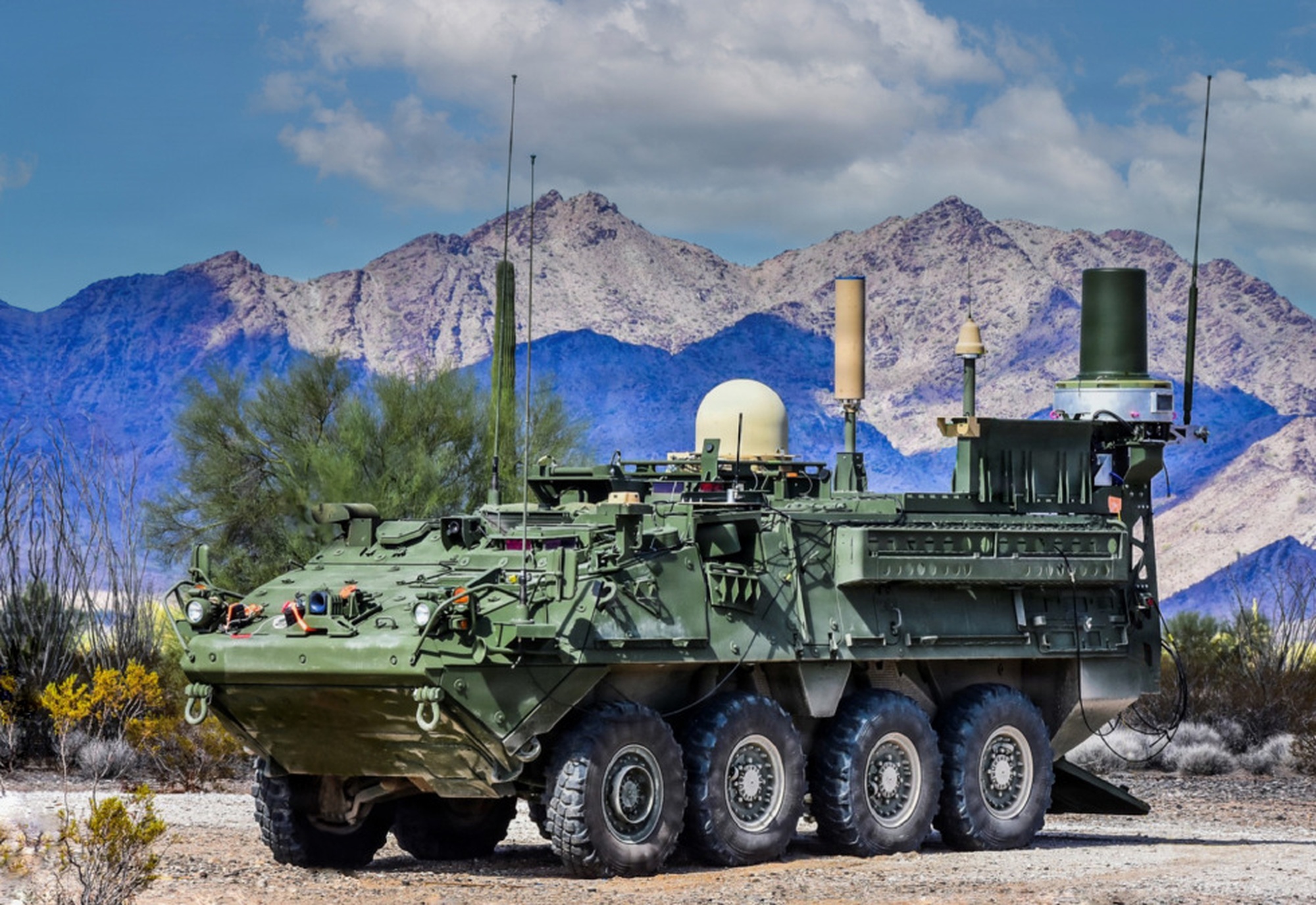
Tactical Electronic Warfare System-Infantry (TEWS-I)
MISSION / DESCRIPTION:
TEWS-I is the corresponding TEWS capability for Infantry BCT formations. Each TEWS-I system consists of an integrated suite of RF antennas and receivers, and processors. TEWS-I conducts EA and ES using the same or similar hardware and software, to include the machine learning signal recognition software as well as integration of signal detectors in the
Tactical Electronic Warfare System (TEWS).
SYSTEM INTERDEPENDENCIES:
- Global Positioning System
- Tactical Radio Communications Systems and Armored Tactical Vehicles
PROGRAM STATUS:
- Program Status: Quick Reaction Capability; Sustainment
PROJECTED ACTIVITIES:
- None, in sustainment
Tactical Electronic Warfare System-Infantry (TEWS-I)
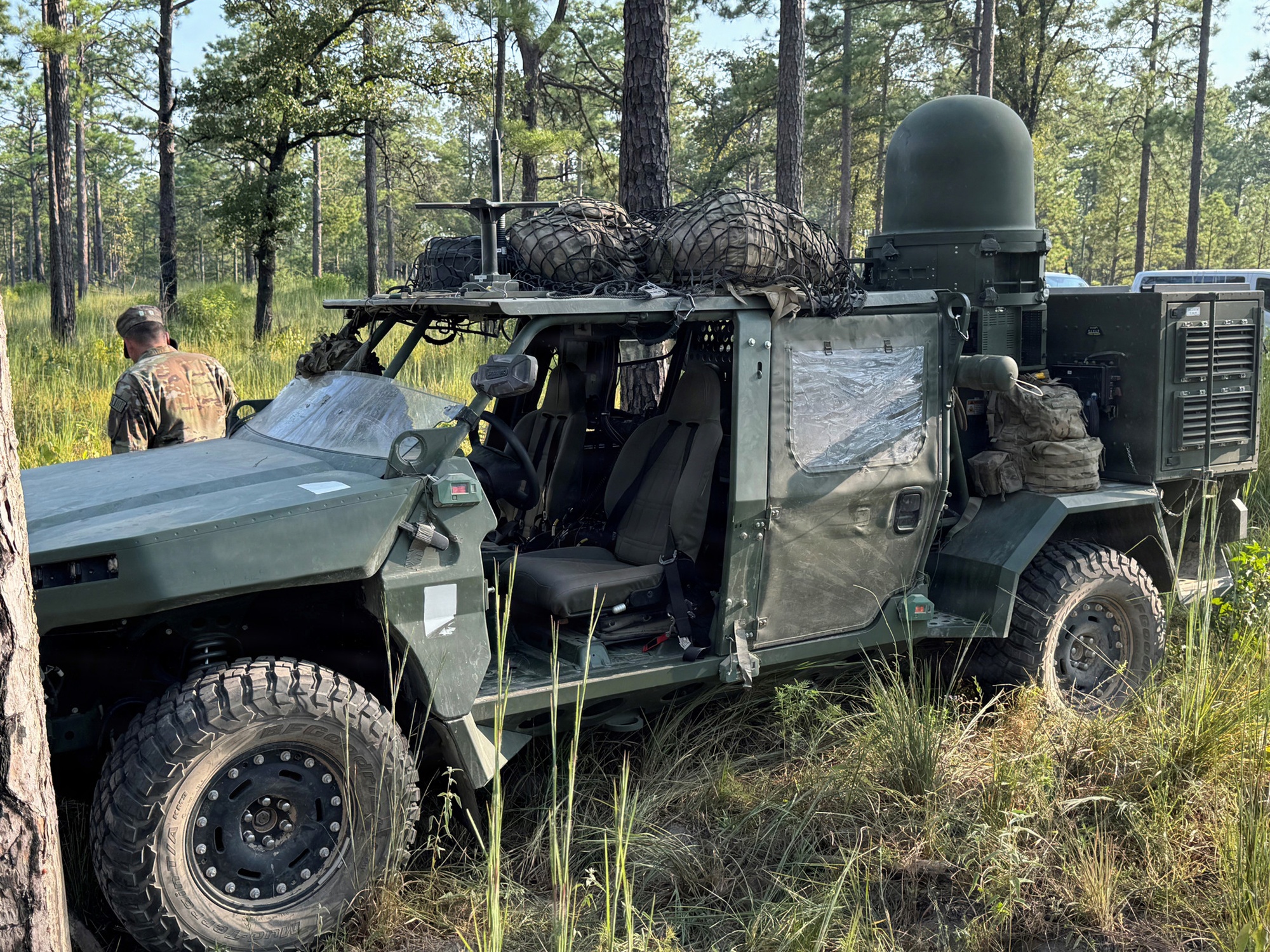
Terrestrial Layer System (TLS) Manpack
MISSION:
The TLS Manpack system is a tailorable, modular, terrestrial capability that allows the integration of SIGINT and EW collection, processing, exploitation, reporting, and effects capabilities within the SIGINT Collection Team (SCT) and Electromagnetic Warfare Team (EWT) elements. It provides the BCT Commander a tactical advantage with a robust state-of-the-art mobile EW capability for Multi-Domain Operations (MDO).
DESCRIPTION:
TLS Manpack is a fully configurable system capable of conducting radio frequency (RF) surveying, signals collection and direction-finding operations, EA and force protection operations, and EMS visualization and scanning/surveying operations.
SYSTEM INTERDEPENDENCIES:
- Assured Positioning, Navigation and Timing (A-PNT)
- Tactical Networks
- Tactical Radio Communications
- SATCOM
- Armored Tactical Vehicles
- Tactical Electric Power
PROGRAM STATUS:
- FY23: Request for White Paper (RWP) and technical evaluation
- FY23: Phase 1 OTA Contract Award for prototype build and demo
- FY24: Prototype build and demonstration
- FY24: Transition to Middle Tier Acquisition Rapid Fielding
- FY24: Production, Training & Fielding Contract Award
- FY24: First Unit Issued
PROJECTED ACTIVITIES:
- FY25-27: MTA Rapid Fielding
Terrestrial Layer System (TLS) Manpack
PM EW&C ADDITIONAL MISSIONS
DoD CREW Single Manager / PM EW&C Foreign Military Sales (FMS)
DOD CREW SINGLE MANAGER:
This office fulfills a role appointed to CPE IEW&S to assist the Secretary of the Army in overseeing Counter Radio-Controlled Improvised Explosive Device Electronic Warfare (CREW) capabilities across all branches of the DoD.
PM EW&C FOREIGN MILITARY SALES (FMS):
PM EW&C utilizes FMS to support the U.S. Army, allies, and friendly nations by fulfilling their needs for self-defense EW technology.
BENEFITS:
- Increases production, lowers cost and manages obsolescence
- Promotes interoperability and standardization
- Builds partner capacity
- Presents new technology
For information about PM EW&C FMS opportunities, please contact us at:
usarmy.apg.peo-iews.mbx.pm-ewc-fms@army.mil

C5 Consortium for Other Transaction Authority (C5 OTA)
WHAT IS C5 OTA?
- Consortium for Command, Control and Communications in Cyberspace (C5)
- C5 is a consortium composed of leading companies and institutions in the C5 Intelligence Surveillance and Reconnaissance (ISR) and cyber technology domains
- C5 accelerates the development and deployment of new capabilities to the Warfighter using the Other Transaction Authority
- C5 is the largest managed consortium consisting of over 1,300 leading technology companies, non-profits and academic institutions
- Typical Period of Performance (POP) is 1 to 3 years
HOW DOES THE C5 OTA BENEFIT YOU?
- Increases participation of non-traditional defense contractors
- Allows industry early visibility to shape requirements
- Maintains open dialogue with Government
- Reduces acquisition lead time
- Lowers bid and proposal cost
For more details, visit: https://cmgcorp.org/c5/

Needs for Industry Focus
- CEMA Techniques (Detect, ID, Exploit, Attack)
- Miniaturized High Gain Broadband Directional & Steerable Antennas
- Miniaturized Broadband Power Amplifiers
- Low SWAP DF Antenna Arrays
- Fast Tuning Sensing, Detection, DF Algorithms
- Low SWAP Miniaturized Tuners, Radios, Processors
- Artificial Intelligence/Machine Learning Algorithms for SIGINT/EW/Cyber
- C5ISR/EW Modular Open Suite of Standards (CMOSS)
- Ruggedized Low Power GPU HW
- Algorithms for Micro Service Architectures
- SIGINT/EW Modeling Simulation and Visualization
- Deep Sensing and Affecting in Contested and Denied Environments
- Transmitter Protection
- Distributed, Cooperative, Operation & Management for Sensing and
- Effecting
- Automated System/RF Component Resource Management
- Efficient Data Compression and Management in Support of PACE
- Advances in User Interfaces/Experience
- NAVWAR Data from Traditional and Non-Traditional Sources
- Weapon-Target Pairing Tools/Models/Simulations
- Software and Hardware Networking Cross Domain Solutions (CDS)
- Tethered System Payloads
- Blue Force Emissions Awareness
Emerging Concepts:
- Attritable EW Payloads
- Disaggregated EW Payloads
- Remote unattended Sense & Effect Payloads
- High Altitude Platform Payloads
- Frequency Extensions
To request the FY2026 Project Manager Electronic Warfare & Cyber Strategic Planning Guidance, please complete the request form below.